Letting the days go by

10 09 2011

I wasn’t there.

But I still have a story, so here it is:

I was in Montreal, and many mornings I rode my bike up Mont Royal before showering at the nearby medical building and heading to my office on Peel Street. The Biomedical Ethics Unit was still in the old red mansion on the west side of the street, and my office was on the ground floor, separated from the main office on the third floor. I had just walked in, maybe turned the computer on, when the phone rang.

I heard my mom, not recognizing me, asking to speak to me. She and my dad were scheduled to leave for their first-ever trip to Europe (I had long pestered them to go), so I wondered if something had happened with their plans.

The trip was cancelled, she said. All the trips are cancelled. What? I said, why? Are you rescheduling?

I don’t remember exactly what she said next, but something about planes, multiple planes crashing in New York, in DC, no one knows what’s going on, we might be at war, haven’t you heard?

Haven’t you heard?

I do remember standing in my office, one hand on my forehead, not comprehending what was being told to me. Not comprehending at all.

Then D., my fellow post-doc, filled my door-frame. Did you hear, he might have said. Something about planes, multiple planes, crashing in the US, A. has the t.v. on up in the office.

At some point I got off the phone and headed up. There it was. I don’t know how long I stayed, watching, before heading over to the Shatner (the student union) for coffee. The t.v. was on there. Students were crying. People were crying. I don’t know if they were Canadian or American. I don’t remember if I cried.

At some point I heard the borders were closed. Closed! I was locked out! I knew, not forever, but I started to know I was on the outside.

Later I was at lunch with the director of my unit (a dual citizen), a colleague, and that colleague’s girlfriend. The girlfriend got into it, I don’t remember over exactly what, but probably over the question of war. I do remember that I took an immediate stance against any immediate action. Let’s wait, let’s not make things worse. Something like that, probably something like that.

Oh, and probably something about how this probably connected to something the US had done. Yes, this was terrorism, and no, the people killed didn’t deserve it, but given how the US acts in the world, it shouldn’t be a surprise when the world reacts. Something like that, probably something like that, is probably what set off the girlfriend. Or something the girlfriend said set this off in me. I don’t remember the specifics, “who started it”, just that we got into it.

Later, not much time later, the director said to me, quietly, that perhaps it was too soon. And I thought, even if I didn’t say it (tho’ I might have said it), that we have to speak now, before everything hardens, and further thought isn’t possible.

Later, maybe later that day, maybe the next day, I rode back up Mont Royal, stood at the terrace near the top and looked toward what I guessed was New York. Could I see the smoke? Could it reach Montreal? Were we all now breathing in the dead?

Melodramatic, I knew, even as I thought it. Besides, everyone would breathe the dead, they would soar around the world and we’d all breathe in everyone’s dead, the way we always had, the way we never thought we had.

A week later I was at the border, a black strip of fabric hanging from my rearview mirror, on my way to see M. & E. in Vermont. I thought it might take hours; it took minutes. No problems, no problems at all.

M. was still working, so E. and I tooled around, running errands, before picking her up (or maybe we ran the errands after we picked her up; I don’t remember). We had to stop at a store E. hated, thought was terrible. “I wish a plane had crashed into that store,” he muttered, and then we both sputtered with laughter. We were terrible, laughing at a terrible joke about a terrible event.

Later, over a year later, hundreds of thousands of us marched down St. Catherine and Rene Levesque; millions around the world marched against the march to war. For naught. I watched the CBC in disbelief as the President led the Congress, and the nation, into war in Iraq. I couldn’t believe it: it was all so transparently false, so obviously wrong, they couldn’t actually pull this off, could they? Yes. And no.

There’s more, of course; ten years, after all. And while I’m in New York now, having not been then, my memories are of the outsider, still.

Which is why I told my story today; let tomorrow be the day for the stories of those who were there.

Don’t get your back up over this

7 09 2011

I’m less clear about how we “get people to meet an obligation to inform themselves before offering an opinion is both to reward such information and punish its lack”. Online and off it has been my experience that people generally don’t appreciate it when you point out (even if gently with leading questions) that they don’t have much of a basis for their not so considered opinions, they feel certain and righteous about their position and have been told over and over that they have a right to their opinions as if that in an of itself justifies the opinion at hand, they may even have a one-line answer from some undergrad class they took in support of it. Whatever the reason people seem to have a hard time separating judgment of the basis of an idea that they may hold from judgment of their persons, even, maybe especially, with strangers, so how to bring some of the philosophical ethos of pushing the ideas, fleshing them out, and testing them and their implications from the seminar into the public realm. and what rewards are there to share with people who don’t yet have a taste of how such demanding work/research can be.rewarding?—dmf

Just when I thought I was done (for now) with this question, you pull me back in. . . .Ha, no. Really, d, Imma stealing from you to feed my blog.

I think it helps to classify one’s interlocutors. If you’re dealing with adversaries—those who seek to get one over on you and vice versa—then it’s anything goes. If they’re shifters, you punish them by not letting go of a single thing they say and not giving in on a single point they make. You point out all the ways they’re wrong, admit of no wrongs on your side, and go after their credibility. “You were wrong on this, and you were wrong on this, and this, and this. . . why should anyone take anything you say seriously?” Attack attack attack.

Despite my vociferousness on this matter, it’s actually not my preferred way of doing things. I like rules, like the notion of “keeping one another honest”, and prefer not to cheat in order to win an argument. If there are no rules, however, then you’d be a fool to act as if there were. The best you can hope for is to diminish the shifter’s sphere of influence.

Or, if you’re not in the mood, you simply walk away—preferably laughing the whole while. (This is how I deal—or don’t deal—with Objectivists.)

Not all adversaries are shifters, however, so some standards apply. If the argument is “staged”, as in, we both know that the real person we’re trying to convince is not the other but neutral others who are listening in, such questions may take on an edge, and some shortcuts in service to the performance are acceptable, but you can’t go too far in upending your adversary. You can’t get mad and you don’t want to make the other person mad, as that would ruin the enjoyment for onlookers, and you have to know when to shrug and let something go. You want to appear reasonable and creditable to those onlookers, so while light jabs are acceptable, garrotting is not.

But if it’s not a performance, if I’m simply trying to suss something out, I find it best simply to ask questions. My forte in verbal combat is in going after the other person’s argument, so I get as much information as I can about that argument. I ask real, not gotcha, questions, and allow the person a full answer. And if their information is or appears incorrect, I’ll ask about that, as well.

If it turns into a fight, I’ll use their words against them, but a lot of times the mere process of asking the questions leads away from the gladiatorial arena. Because I don’t twist their words or mock them or sneer at their views, if I offer them the benefit of the doubt, they’ll often open up, both in expanding upon their views and in their willingness to hear my concerns. And I don’t try to convert anyone, not overtly, anyway. I just ask questions, ask them to think about x from the vantage point of y, and then let it be.

It’s the soft approach—something which I would have abjured when younger—but now I can see the possibilities, and not just the threat, of such softening up.

The Old Man knew this long before I did:

Ring the bells that still can ring
Forget your perfect offering
There is a crack, a crack in everything
That’s how the light gets in.

There is a crack, in everything/That’s how the light gets in.

_____

(h/t Zoe Pollack, The Daily Dish: Leonard Cohen’s “Anthem”)


If I’m so wrong and you’re so right

5 09 2011

is this all about convincing other people to share our intuitions and if people don’t share such faith (religious or otherwise) convictions on what possible basis would they be convinced by anything we say that builds on them? Is there no obligation to try and have some researched basis for our public opinions?—dmf

No easy questions, eh, d?

I don’t know that there’s any one, good, way to deal both with clashing ontologies and the question of the quality of the opinion. Habermas attempts to do so, as do Guttmann and Thompson and deliberative theorists generally—attempts which tend toward the suppression of fundamental conflicts and an optimism regarding shared language. Focus on a respectful process and practical goals, G&T advise, and use reasons which can make sense across any epistemological or ontological divides. Aim for consensus rather than winning, or rather, see consensus as winning. The point is not just to solve problems, but to deepen democratic discourse generally.

I am, unsurprisingly, skeptical of the deliberative approach, of the willingness of different sides to agree to a shared approach, and of the desire for mutually-agreed-upon outcomes over a clear win. That said, I think it can work in specific instances, especially those in which participants really do want to solve a problem and where some version of splitting the difference (as in, allocation of funds) is possible.

It does not work on matters where an underlying principle is so closely related to the position that any disagreement on the principle makes impossible any agreement on outcome. The exemplar of this kind of conflict is that over abortion: female autonomy runs up against fetal personhood, such that the right to choose cancels the right to life, and vice versa. There is no splitting this difference, at least as it is currently configured; there are only winners and losers.

These sorts of polarized debates (which can arise for any number of reasons, including hyped-up partisanship) make it very difficult both for us to find a shared language (fetus/baby; undocumented immigrant/illegal alien; etc.) and to agree upon any standards of debate. If I am convinced I am right I won’t agree to any standards which might allow you to win the argument, and will dispute your starting point, reason, evidence, and conclusion.

The abortion debate, however frustrating and exhausting it may be, may nonetheless remain within the confines of democratic debate. We may not be able to resolve the conflict, but in the main (not, necessarily, on the margins), it can at least be contained by such debate.

That’s not always the case.

Consider the political debate over global warming. Most scientists agree that the planet is warming and that human activity has contributed to increased temperatures. If I think global warming is scam designed by extremist leftist-environmental types, I’m not going to listen to anything you have to offer which might prove me wrong. I’ll bring up the so-called climate-gate and take issue with any inexactness of your evidence, and will offer my own scientists and state that the reason they’re not published in scholarly journals is bias, plain and simple.

I am energized by fierce political argument, but this shit is disturbing. This isn’t simply about two sides disagreeing about the evidence, this is one side outright rejecting the relevance of evidence: it can’t be so it must not be. And if we can’t stand on the same ground on an issue for which there is clearly only one place to stand, then how the hell are we going to have any kind of conversation or debate about what to do about that issue?

In other words, what should be a good and vigorous political debate about what to do in response to a phenomenon (anthropocentric global warming) has been made impossible by one side of that debate declaring, in effect, that its politics don’t allow it to see the preponderance of evidence for that phenomenon. In short, the political commitments of one side has forced it to rule out the existence of the phenomenon itself.

There is no way to deal with this kind of reality-shifting except to defeat it. By any means necessary.

There are other kinds of less dire political debate wherein some notion of reason and evidence is accepted by the various participants. There may be scuffling over evidence or even the sources of evidence but not over the need for evidence itself. In these cases, your question of obligation for a researched basis is mooted insofar as it is beneficial for the participants to have done their homework ahead of time.

In other words, the best way to get people to meet an obligation to inform themselves before offering an opinion is both to reward such information and punish its lack.

Dealing with reality-shifters, I’m afraid, is largely a negative affair. You have to beat them (metaphorically, of course!) into submission, allowing them no quarter in any debates. You’ll never win them over, but you might be able to win nonetheless by so discrediting them to any larger audience. You trample over the shifters to speak directly to the audience, and smack ’em back down whenever they pop up with an objection. You rely, as ever, on reason and evidence, and offer zero respect for arguments which rely on neither.

However much such a strategy may be in service to a democratic politics, it is not democratic itself; it is, instead, brute, and brutal, politics. It is a ground war, one fought to establish whether the elements necessary to democracy will be encouraged to flourish, or not.

There will always be disagreements over the grounds, the standards, and the desired outcomes of debates; a democratic politics takes for granted the disagreement over desires, accommodates those over standards, but may shatter if it becomes too preoccupied with the grounds.

Whatever other commitments its citizens make, whether some have one foot nestled in heaven and some, dangling over the abyss, the other must be planted on common ground.


I have no opinion about that

4 09 2011

Riddle me this how do we decide how much info/understanding should we have about a topic before we feel justified in having an opinion that is more than a gut hunch? —dmf

I once introduced myself to colleague as someone who “has lunch and opinions”, so I can’t say that it ever occurred to me that I needed to justify the having of an opinion. As far back as I can remember, I have had opinions about something or another, from the superiority of homemade jello pops over store-bought popsicles to the belief that swimming was the summer activity, to the obviousness that racism was stupid and girls were equal to boys, and on and on about cars and music and food and friendship and clothes and alcohol and sex and money and liberty and justice for all.

No, for me, the corker was justifying not having an opinion.

I do, in fact, now qualify my opinions in ways I didn’t when younger, and I do justify not having opinions about a whole range of topics, based on 1) lack of information and 2) lack of interest. “Don’t know/don’t care” is a pretty damned effective gate to conversations which would otherwise drive me off a cliff.

Still, I don’t regret my previous opinion libertinism, and I don’t begrudge anyone else their expressive needs. I learned a lot in spouting off, both in how to put together an argument and in prompting others to take issue with me. I hate hate hate to be wrong, but I hate even more the persistence of error. I could—and can—also be sloppy in my pronunciamentos, so getting smacked (or wanting to avoid getting smacked) for spilling too many words has forced me to steady my tongue.

(There’s the additional question of credentialism and the desire not to want to make a fool of oneself in front of one’s colleagues which may lead to a crippling reticence, i.e., in not challenging a majority view for fear that the mere expression of a minority opinion marks one as untrustworthy—but that’s a separate issue.)

Given my own history, then, I’m more likely to indulge than shut down opinionists, especially if they’re willing to go back and forth on an issue. Shooting the shit can be an highly enjoyable way of passing the time.

What I do narrow my eyes at are those who state their opinions as fact and who substitute their subjective experiences for objective certainty. That you have a right to an opinion doesn’t mean you have the right to trump all other opinions. Oh, and shouting doesn’t make you right. (*Full disclosure: I have shouted. More than once.)

So anyone can have any opinion about anything. If, however, you want that opinion to have any weight with anyone else, you gotta do the work—the (self-)education, the reflection, the reasoning—to convince them. Mary Harris “Mother” Jones got it right when she admonished: Sit down and read. Educate yourself for the coming conflict.

Educate yourself. Quite so.


Dum-de-dum-dum DUM!

27 08 2011

I am an idiot.

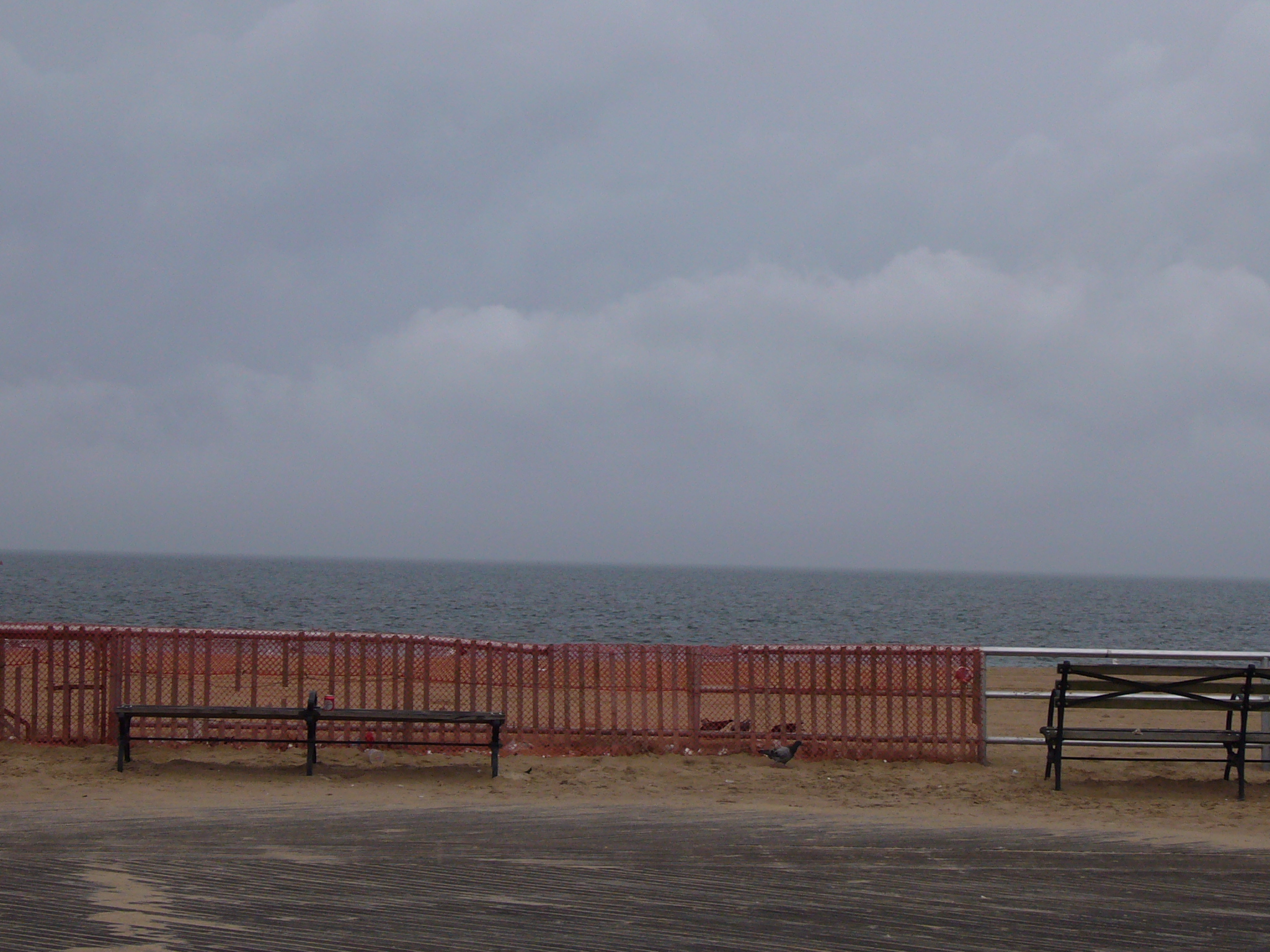
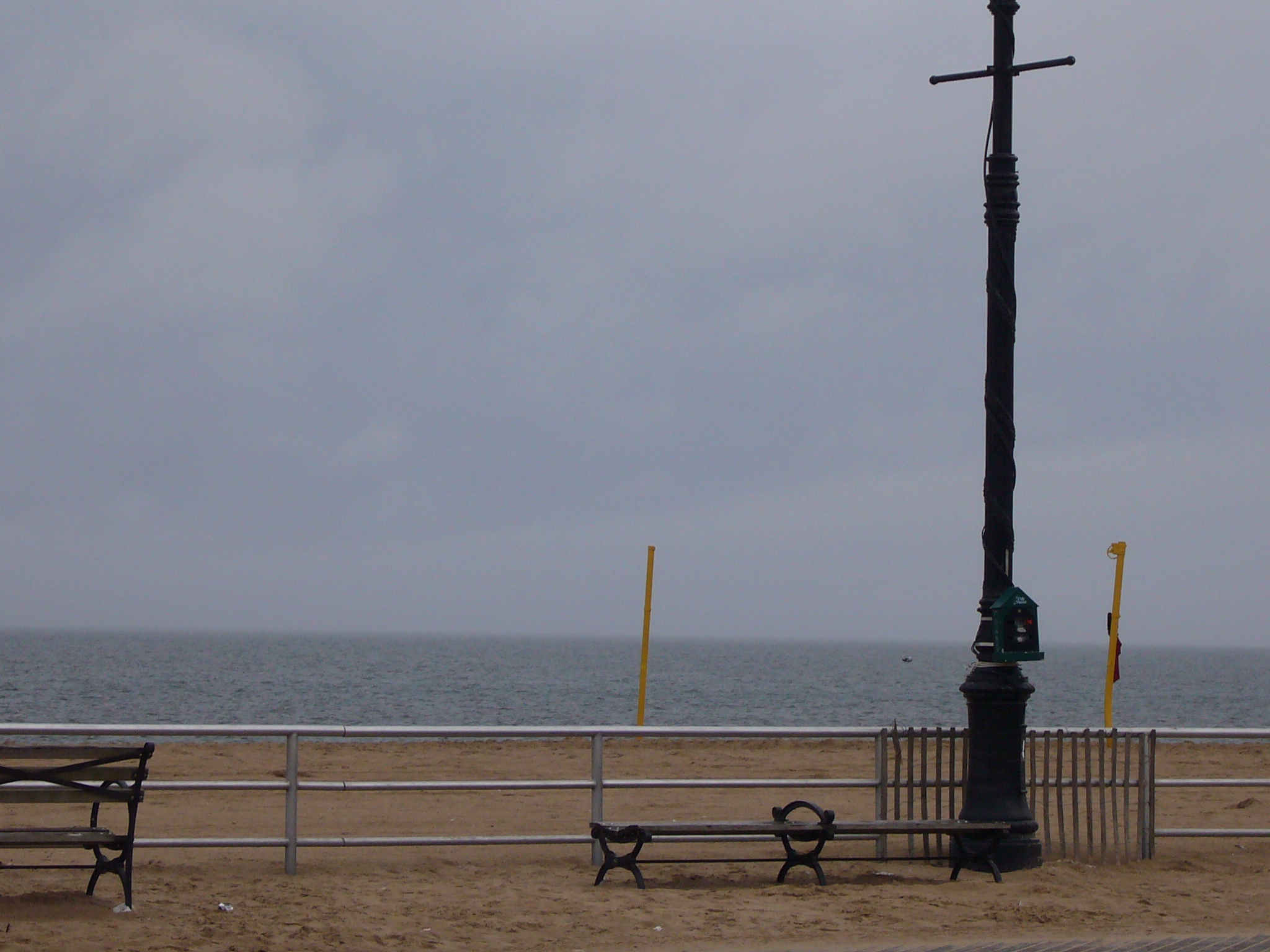
No, not for riding to Brighton Beach with C. to check out the storm. It didn’t rain and then it rained a little and then a lot and then it stopped and, anyway, this is what we saw:

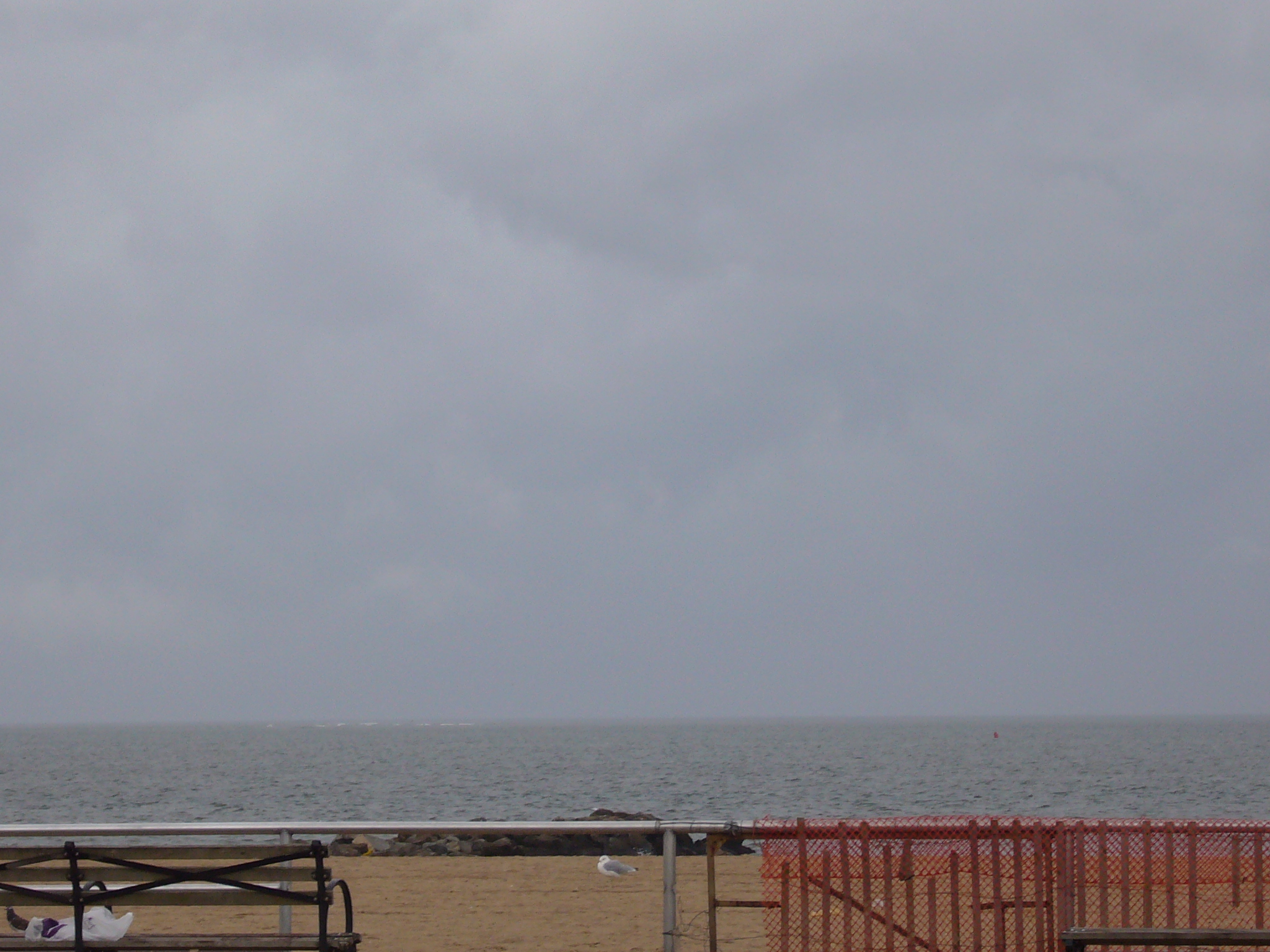
We did see some waves:

What, you couldn’t see it? Here, this might help:

Yep. That was it, as of 3:00 Saturday afternoon.

There were some number of us behind the yellow tape (keeping us off the boardwalk), and nobody seemed particularly panicked.

Or disappointed that there was nothing much to see. Yeah, C. and I wanted crashing waves and, y’know, something interesting, but we agreed that we had to look, and if nothing else, we got in a wee workout on our bike down.

This is where the I-am-an-idiot piece comes in:

Can I blame this on the storm?

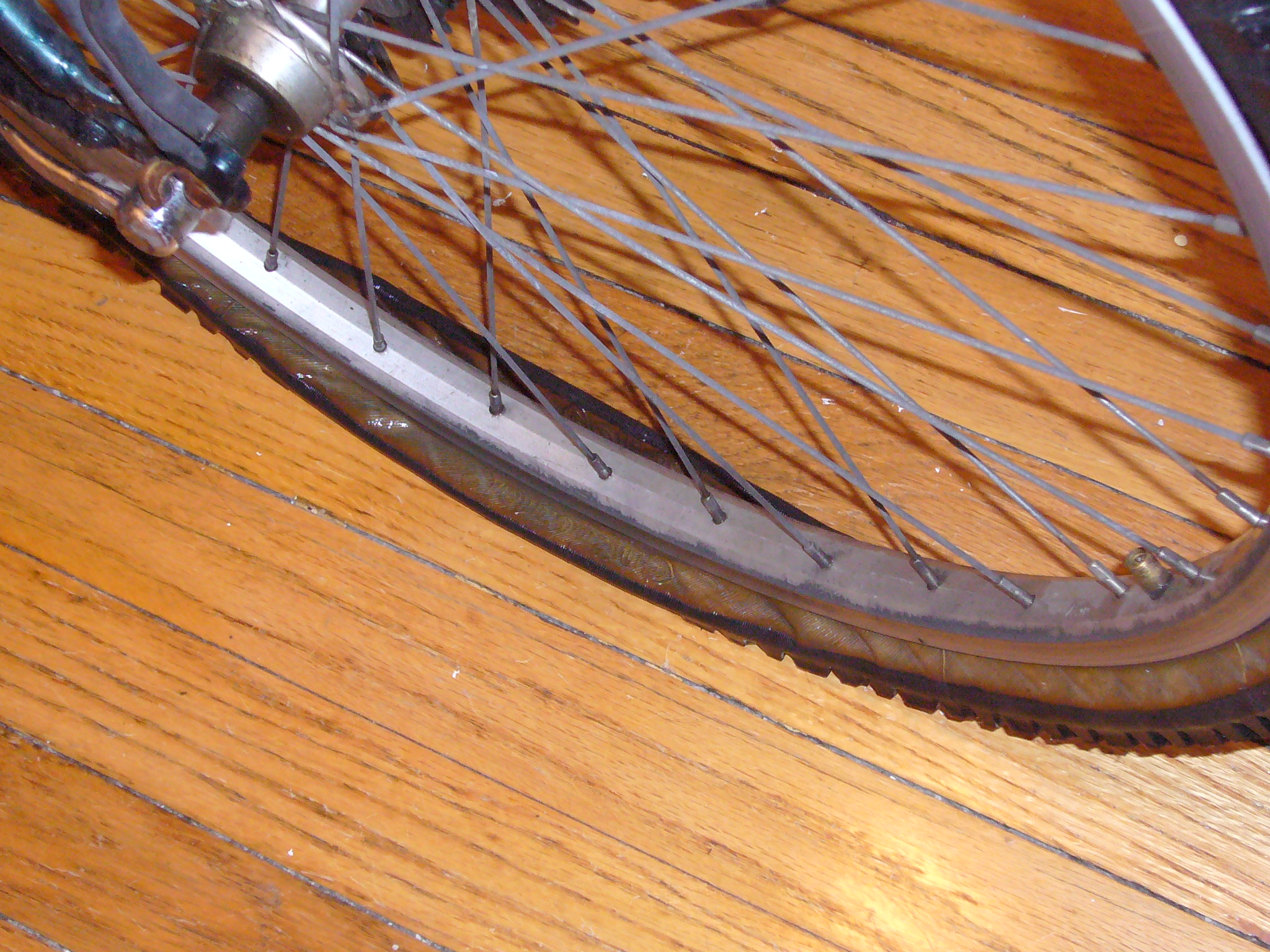
Yes, I got a flat.

That’s not the idiot-making part, however. No, it was my EXPLICIT decision to bring NEITHER my patch kit NOR my pump on the ride.

Oh, hey, it’s just down to Brighton. Not that far. I just fixed a flat; what are the chances I’d get another? Anyway, it’s not like we’re going to the Rockaways.

Dumb dumb dumb.

C. was great. I checked with one SUV cab for a ride back home, but he declined. At her suggestion, we decided to walk while looking for another SUV cab, and ended up walking the whole way back.

It was raining, but not too hard and it wasn’t windy, so we just chatted. About her novel. About the point of education. About homeschooling. About whatever. It took awhile, but it didn’t feel like it took long at all.

I don’t know if I’d have bothered to go without C.’s enthusiastic decision to accompany me, and it would have been a fucking miserable walk back alone.

With her, it was all good.

(Okay, I got a coupla’ blisters, but, really, I can get those wearing the wrong shoes to my local take-out joint.)

Anyway, mindful of  how my disregard for the “better-safe-than-sorry” adage screwed me over, I decided to be proactive for the rest of the weekend:

Honestly, not really hungry for either (and the Oreos really do need to be frozen), but, again, “be prepared”. . . .

As for other essentials, well, I already had those:

Trickster agrees!


Don’t walk away Irene

26 08 2011

Hurricane Irene is bearing down on New York and I’m. . . thinking of hitting the beach.

C. and I are, in fact, if we can manage it.

No, we don’t plan to be fools—we’d hit Brighton Beach Saturday afternoon, at the latest—but hey, if we can safely bike down and check out the waves, why not? We both like the ocean, we like waves, so here’s a rare chance to see big waves in the ocean!

There were a coupla’ nasty storms in the Boston area when I lived there, but I never made it to the beach (the one on the north side, with the famous lobster roll joint) at the sweet spot of any oncoming storms: close enough to see that, in fact, a storm was coming, but not so close that the water crashing over the breaks on the highway would wash away your car.

No, my only real experience with ocean weather occurred years before, when L. and I road-tripped to Alabama to check out a master’s program for her. After looking at the school in Daphne and poking around Mobile, we set up camp at Gulf Shores State Park in advance of what turned out to be a tropical storm. (Being the good Midwesterners that we both were, we had no clue what that meant.) I don’t recall any rangers telling us it might not be the best time for a couple of small women in a (water-resistant!) nylon tent to kick back on the gulf. We did at least plunk down the tent on the highest ground on the site, joking that the preferred site under the tree could “turn into a big puddle”.

Ha ha.

Anyway, that day was gorgeous. While the campground seemed pretty full (plenty o’ RVs, at which we shook our heads), there weren’t many people at the beach. The sand was white, the beach wide, and the water warm. At one point a water spout formed and we had a good laugh at the panicked look on a woman’s face as she rushed her kids out of the water.

Ha ha.

That night we broke out a bottle of vodka and poured some into our lemonade, then strolled down to the beach to look at the stars and watch all the clouds and thunder way out there across the water. What a show!

We crawled into our tent, looking forward to another day or two at this lovely, lovely park.

You know what happens, of course: That water spout was likely an auger of the storm, that nifty show moved ashore, and yes, it was a very lucky thing that we hadn’t pitched the tent in what was now a pond which waters reached my knees. We had managed to stay relatively dry in the tent, but that highest point was at the far end of the campsite, some distance from the car. We broke down the tent and ran our gear to the car, tossing it in without packing and peeling the hell out of there. There was a nice, solid bathroom nearby, so we took our gear in there and managed to impose some order on our belongings. (There may have been hand-dryers, and we may have tried to dry our gear/ourselves, but I don’t quite remember.)

Then away from the Gulf coast, away from the park, and an early departure for Wisconsin.

Yeah, we were safe and we didn’t lose our gear and it all turned out blah blah, but damn, we coulda used those extra few days at the beach. . . .


Shake it up baby

23 08 2011

Felt like we just had an earthquake. Went on for some time—45 seconds, maybe?—but more trembly than cracking.

Huh.

*Update* Yup, it was an earthquake, a 5.8  5.9  5.8 out of Virginia.

Glad I wasn’t on a train or in a tower.


Home again, home again

21 08 2011

Did I mention that my mother got a tattoo for her birthday?

On her ankle, about an inch-and-a-half, two inches.

A butterfly.

Apparently, she’s long wanted one, but only now did the time seem right.

Besides, she said, I’m at that age where everything that was going to sag has sagged.

~~~~~

When I was in college it was easy to go home; it was still “home”, after all.

I left for good when I left for my second year of college—not that I knew that at the time. It was just that I decided to stay in Madison in a sublet that summer and work, then the following summer I was in my apartment and working, and then, y’know graduate school.

I kept stuff at my parents’ house, gradually moving it to whatever apartment I was in in Minneapolis (I moved a lot those first few years), then moved some of it back to their attic when I hied on out to Montreal.

And there was a big drawer reserved for some clothes, which was then downsized to a smaller drawer. I still have some old running shoes there, which came in handy this last visit.

Oh, and I went through a bunch of boxes that were still in the attic. I thought they were just grad-school books, but there were toys, stuffed animals, files, and some books from when I was a kid.

The Great Brain, Encyclopedia Brown, a few books by Ruth Chew, and the first book I ever read (memorized, really), The Monster At The End Of This Book.

I don’t particularly like sentimentality, but I thought, what the hell, I can keep some of those old books.

So I still have a box. And a drawer.

~~~~~

When did it become strange to go back to SmallTown?

Like I said, it was normal when I was in college, and probably into graduate school, as well. Maybe it was when I stopped returning for Thanksgiving: Minnesota was on a trimester system then, and the fall quarter ended the first week of December—too close to the end to leave town.

Maybe when I ran away to Albuquerque, and had Christmas dinner with T. and her then-husband at their apartment in the NE quadrant of ABQ.

Who knows. At some point when I said I was going “home” it sounded strange to me, to use the term “home” for a place which was once, but never would be again. Home, now, would be where I lived.

Still, even today, I’m not at all sure I’m home.

~~~~~

This last visit discombobulated me. It was normal to go back, then it got hard, and then it was a rush, and now, now it’s just odd.

When it was hard, it was as if I flipped a switch to return: Blue when I’m out of state, notched over to red when I’m in state.

Either/or.

Now, now things are blurry, and they slide along rather than click over one side to the other.

Not bad, really, but in some ways it was easier when it was hard.


Where never is heard a discouraging word

16 08 2011

So I went away for awhile.

Surprised my mom for her 70th birthday. Made her happy.

And I saw old friends, of course, which meant I drank and ate (cheese curds!) and laughed and drank and ate and laughed. That was good. Made me happy.

I walked all over town, down past the dime store and up and around the old elementary school and junior high (now just a middle school) and over to the athletic field.

It seemed so big, back then. Now, it was just quiet.

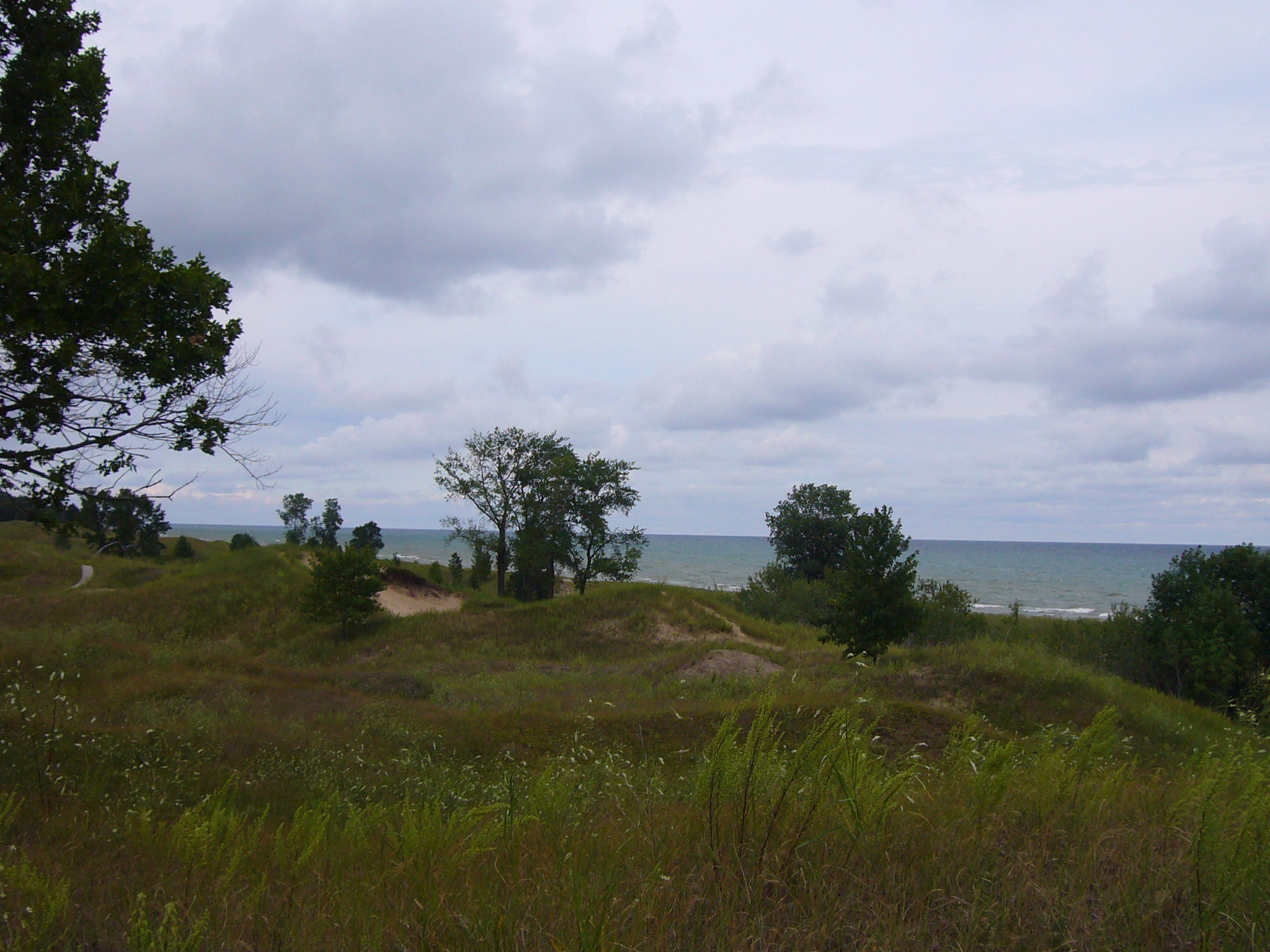
And T. and I walked amongst the sand dunes  at a park we call Terry-Andrae but the state calls Kohler-Andrae:

When I was a kid my family regularly camped at Terry-Andrae, along with a group of my parents’ friends. (I smoked my first cigarette at 9 with B., who was 11. Coughed. A lot.) We’d tear around on bikes or go tromping along the dunes or thread our way through the trees—anything where we could pretend we were completely on our own.

Anyway, I remember the dunes as more sand than green, and there were no wooden pathways through the ups-and-downs, but, y’know, folks nowadays are much more concerned about preservation than anyone was back in the ’70s.

We used to launch ourselves off the tops of the dunes, counting on the sand below to give and slide down with us. That lower part of the dune, looking out over Lake Michigan, is still sandy (didn’t take a shot of that), so it could still be done.

You might get yelled at by park rangers, though.

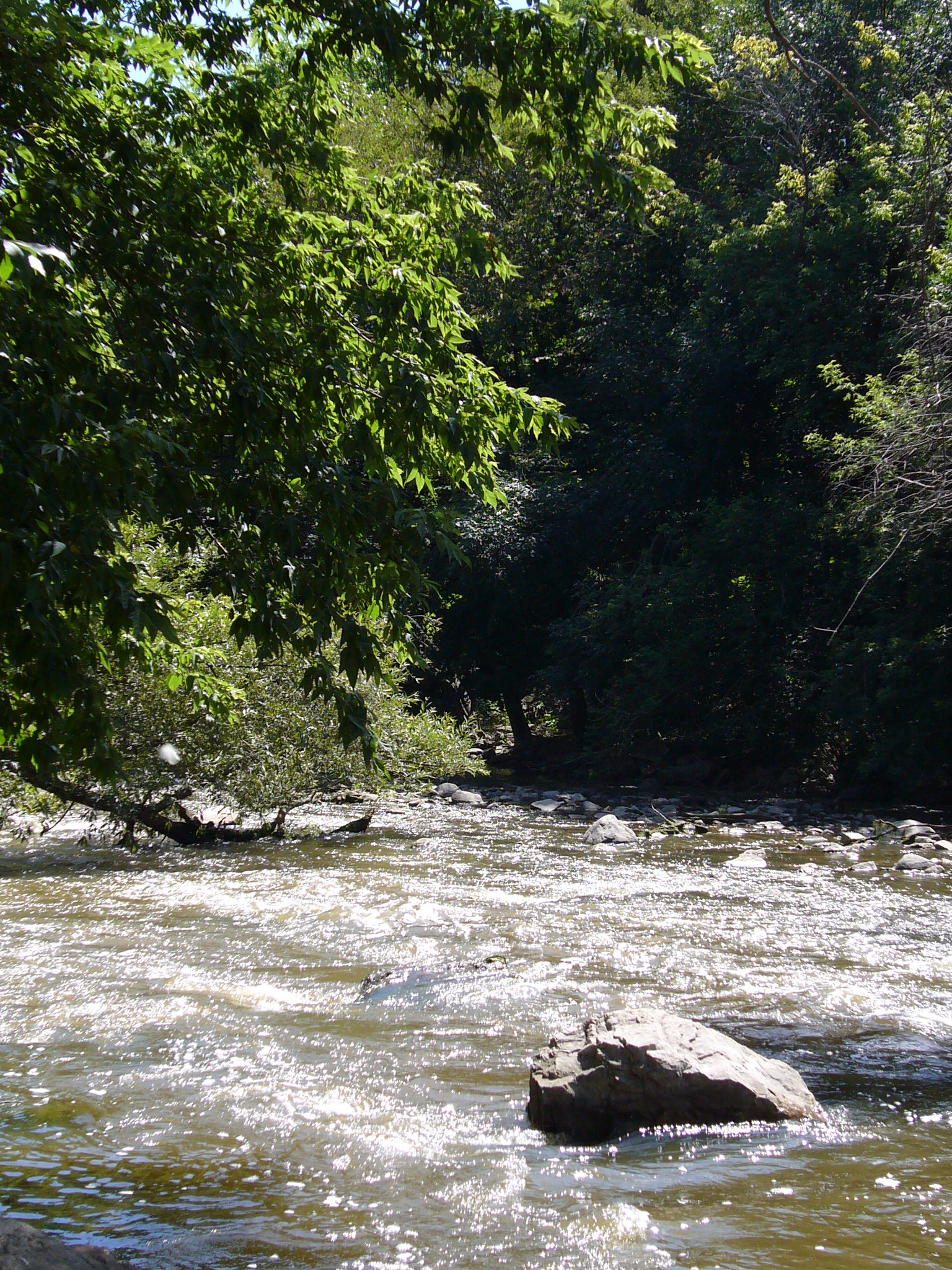
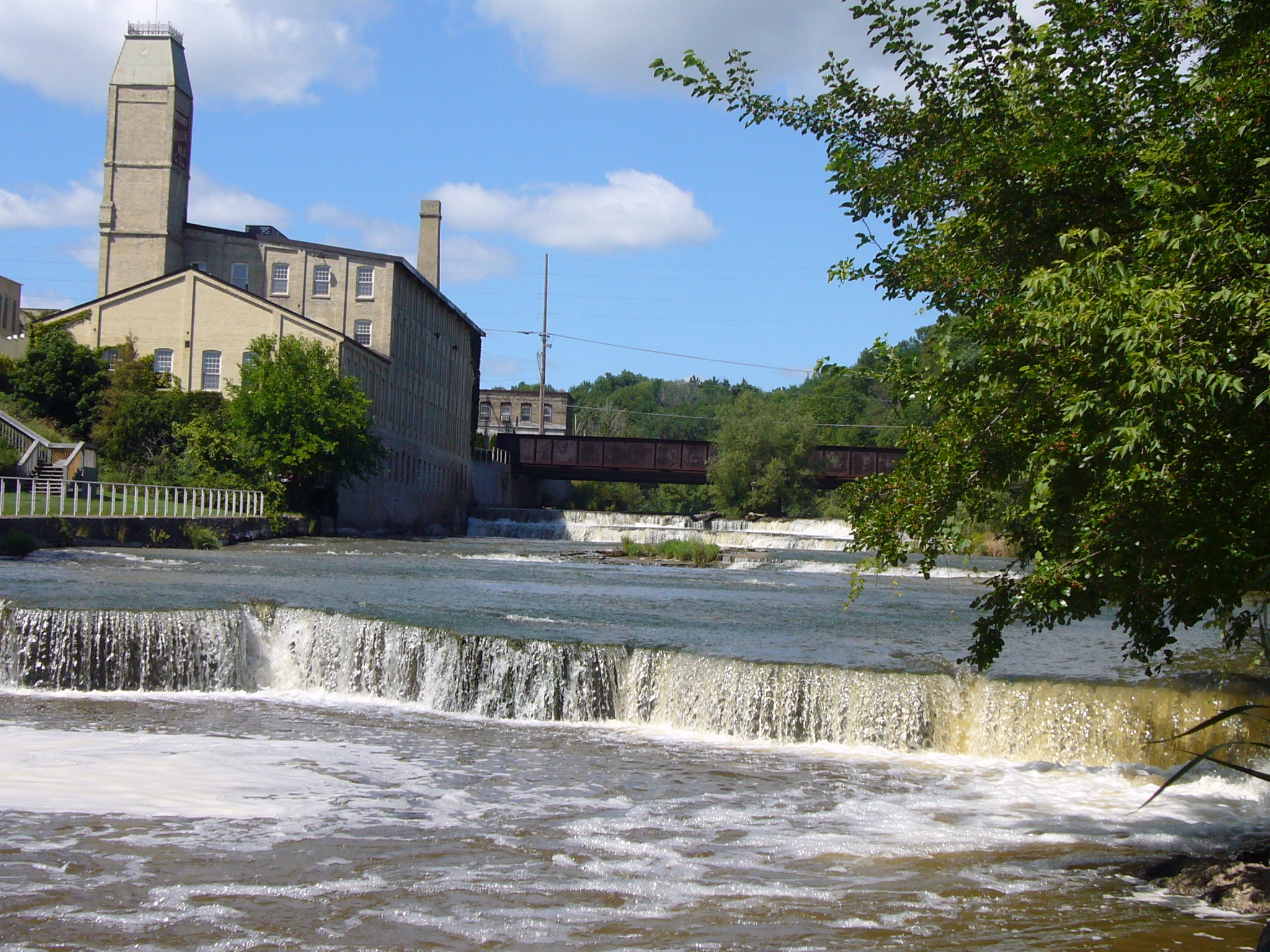
No ranger in sight at the park below the falls in town:

The river is brown and muddy; it’s been brown and muddy for as long as I can remember.

My mom, who grew up in town, remembers when the dyes of the woolen factory (pictured below; now converted into apartments) would turn the river green or red or blue.

That rusted-brown bridge in the back? That was an active railroad bridge back in the day (since decommissioned, although there is talk of bringing it back), one which we would cross as kids.

Weren’t supposed to, of course, and you had to screw up your courage to do it the first time, but after awhile it was second nature to skip across the ties rather than take the sidewalk on the “regular” bridge.

Yeah, that’s all closed off now, too, though I bet kids are still finding their ways across that bridge.


I’m leaving it all up to you

7 08 2011

It was so obvious I forgot to mention it: the Big Fear.

About The Unexpected Neighbor, I mean, the main reason I hesitated to tell people  I knew that the book was now available at Smashwords.

And no, not whether or not they liked it. But whether they’d think less of me for this story. I mean, they could like it, but think it a trifle, and thus consider me. . . trifling.

Y’know how I mentioned a couple of posts ago that, however foolish the attempt, I nonetheless try to control what people think about me? Wasn’t kidding. Not one bit.

So here I tell people—you, my friends in New York, a friend in Wisconsin, my mom—that I wrote this book. Because I want you to know that I wrote this book. And I might even want you to read it.

Maybe.

But if nobody I know reads it, I don’t know if I’ll be more disappointed or relieved. I want you to like the story, and I think the story is likable, but I’d like you to like it quite apart from me—as in, AbsurdBeats is here and the book is there and never the twain shall meet.

Silly, I know, and embarrassingly neurotic. (Okay, so the control thing may have something to do with neurosis, as well, but it sounds so much. . . flintier to state I want to control than to say I want people to think well of me. Control, yeah, I’ll go with that.)

Anyway.

I want to get better at this, the novel-writing, and while I think The Unexpected Neighbor is a decent first book, I don’t know that I’d have published it if I thought it were my only book. I wouldn’t want this to be too big a piece of me.

It’s not me. It’s not biography, and no one in the story is me. But it came out of me and there are bits of me (and friends of mine) scattered throughout these characters. It’s not all or nothing; the twain has met.

It’s mine, but not me.

I know that. I have to trust that if anyone I know reads this, they’ll know that, too.

How they know that, well—deep breath—that’s not up to me. That’s up to them.

Or I could just hope that only strangers read it.

_____

(This is the real hat-tip to Susan Wise Bauer, but her site’s not loading; I’ll add a link when I can here’s the link.)