What’s up with the weird wonder?

11 10 2011

I blame Greil Marcus.

Yes, Lynda Barry kicked off this theme for the blog, by my ears were first pricked reading Marcus in The City Pages, which is when I first encountered the notion of “weird old America”.

Weird old America: what a wonderful phrase.

Now, does it matter that the actual phrase was “old, weird America” and has something to do with Bob Dylan and basement tapes and an invisible republic? From a librarian point of view, yes, but from the necessity of having one’s ears pricked and interest piqued and thought provoked, not really.

In any case, it gave me an insight into this country that I had never previously considered: that this is a profoundly strange joint, and that maybe, just maybe, I could ease up a bit in my assessments of the US of A. Or maybe not “ease up” so much as “open up”, to let myself see beyond the cold, clear lines of politics and carefully sculpted narratives into the brambles and crannies of these American cultures.

I knew Americans weren’t necessarily more rational or normal than any other people, but that’s how we talked of ourselves, as Americans. To be American was to be free and brave, to live the American Dream, be all we could be, etc. It is a narrative of striving and effort and independence and normality, and while there might be plenty of individuals and maybe even “subcultures” which members deviated from this clear bright line, those deviants were no part of the culture.

Marcus’s phrase (in my misremembering) helped me to see that, ehhhhn, all of those individuals and subcultures who wonder away from that line are also America. They aren’t artifacts or zoo creatures, “outsider artists” who exist to confirm the rightness of conformity or who may only comment upon, but not participate in, this American Life, but are themselves woven into the warped woof of our cultural fabric, that the normal is as warped as the rest of it.

I’m getting too cute with words (one of the side effects of dipping into weird wonder); I mean to say, Marcus fucked with my sense of direction and perception. I took this nation’s superpowerness for granted and Marcus said, quietly, not quite. He undermined my view from above, and with the invocation of “weird old America” gestured toward all these pieces of our lives that don’t quite fit a clean narrative but fit, nonetheless.

You can still be angry, he allowed, but you can be affectionate, too. Open up, enlarge yourself, appreciate what’s there.

Some folks need to stiffen their spines, need a reminder to squint at what they’re told or take a hammer to what is, but I need the nudge to take it easy. I like hard lines and sharp angles and interrogations and prosecutions; to think is to critique.

Except that it’s not, not the whole of thought; that’s where the wonder comes in.

And the weird, the weird can be the lever that cracks open the wonder.


Weird wonder watch: Alyssa Rosenberg

11 10 2011

Okay, so I’m pretty almost kinda yeah okay absolutely certain that I did not come up with the whole “weird and wonderful” thing.

Still, now that I’ve latched on to it, I see it everywhere! To wit:

Baltimore On Film

By Alyssa Rosenberg on Oct 11, 2011 at 5:48 pm

The Raven looks like a profoundly silly movie, but it continues the proud tradition of weird and wonderful cinematic things happening in Charm City:

Right on, sister. RIGHT. ON.


All things weird and wonderful, 4

10 10 2011

Greil Marcus:

4) Townes van Zandt, “Coo Coo,” on Acoustic Blue (Tomato) A 1994 concert version from the late country songwriter: Never has “Coo Coo”–or “The Cuckoo,” or “The Coo Coo Bird,” or “Jack o’ Diamonds”–taken on such detail, such melodrama. Two minutes in and it’s not a song at all, it’s a western.

Real Life Rock Top 10, City Pages, February 11, 2004.


All things weird and wonderful, 3

10 10 2011

_____

Suzy Becker, All I Need To Know I Learned From My Cat


All things weird and wonderful, 2

10 10 2011

More Marlys!

An inspiration:

Lunch!

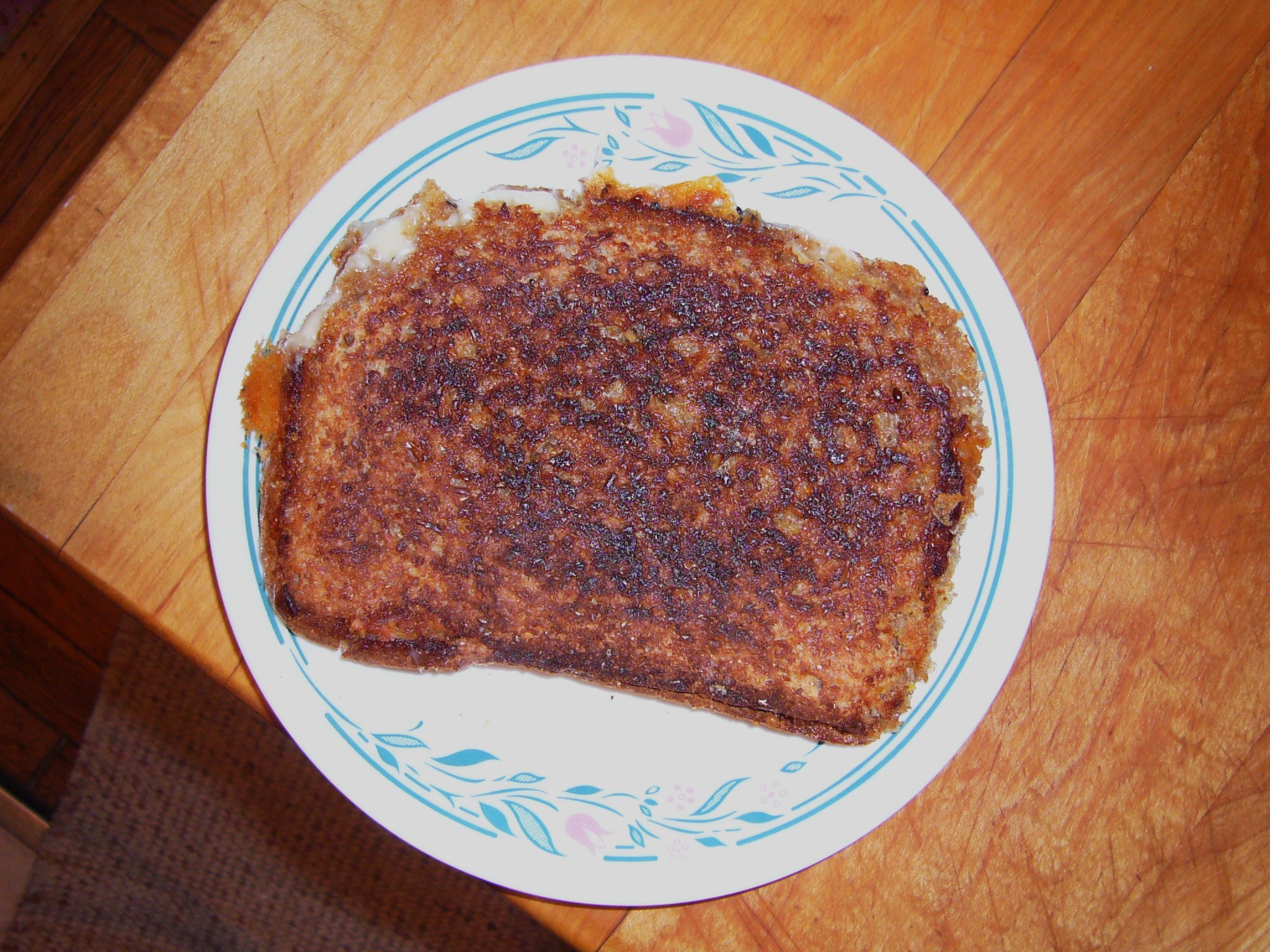
Multi-grain bread, olive oil, spicy mustard, extra sharp cheddar, fontina, and seasonings, all smashed waaaaay down.

Delicious.


Weird and not wonderful

9 10 2011

Rick Santorum, on the varieties of discriminatory experience:

“It’s not the same thing,” Santorum said. “You are black by the color of your skin. You are not homosexual, necessarily, by the color of your skin.”

(I know, he’s usually not worth covering, but this was too good to pass up.)


All things weird and wonderful: Lynda Barry

9 10 2011

Okay, so that’s not really the line, but Ms. Barry is wise and weird and her work is weird and wonderful and now I am ON A CAMPAIGN to bring weird wonder to us all:

Who do you know who is weird and wonderful? What brings out the weird wonder in you?

Nominations, people, nominations! THIS IS A CAMPAIGN!

As Marlys and Arna and Maybonne and Freddie would say: Right on!


You spin me right around, baby, right around

9 10 2011

The national security state must be expanded in order to guarantee the security of those who secure the state:

Last month, President Obama’s top counterterrorism adviser, John O. Brennan, delivered a speech in which he strongly denied the accusation that the administration had sometimes chosen to kill militants when capturing them was possible, saying the policy preference is to interrogate them for intelligence.

The memorandum is said to declare that in the case of a citizen, it is legally required to capture the militant if feasible — raising a question: was capturing Mr. Awlaki in fact feasible?

It is possible that officials decided last month that it was not feasible to attempt to capture him because of factors like the risk it could pose to American commandos and the diplomatic problems that could arise from putting ground forces on Yemeni soil. Still, the raid on Osama bin Laden’s compound in Pakistan demonstrates that officials have deemed such operations feasible at times. [emph. added]

The number of soldiers in the field has to be increased so as to increase the security of the soldiers in the field.

The number of police has to be increased so as to increase the security of the police.

Every action demonstrates the need for more action; there is no such thing as overreaction.

You can never be too safe.


Campaign 2012: Mitt speaks!

8 10 2011

Anything goes in politics.

I have declaimed this often and loudly on this and other (well, TNC’s and sometimes Emily’s) blogs: the only thing that matters in political campaigning is what works. That’s it.

What about the law? If breaking the law doesn’t work, don’t do it. Most of the time it doesn’t, but some of the time—particularly as regards campaign finance—it doesn’t matter: any final rulings on the matter take place after the election and involve only a fine, if that.

More to the point, I see no point in getting OUTRAGED or offended! by campaign rhetoric  because so much of this rhetoric is designed to rouse one’s base, which pretty much has the effect of OUTRAGING and offending! the other side.

C’est la vie politique, in other words.

Anyway, there are limits the O and o! tactic, in that presidential candidates need to convince the undecideds to toss their votes to them. You don’t want to O & o! these folks, you want to bring them along; given that by definition they’re already more skeptical of your candidacy, you don’t want to do anything which causes them to squint their eyes, twist their lips, and say that’s dumb.

I nominate former governor Mitt Romney’s foreign policy speech to the Citadel for the squint treatment.

He says a lot of contestable items in the speech, repeating, for example, the canard that Obama has “apologized” for America. Whatever: that’s a Republican theme manufactured to sow doubts about Obama’s fealty to the US, and while there is no evidence of any sort of “apology tour”, this attempted theming is a standard part of any political campaign (see: Al Gore and his alleged invention of the Internet).

This, however, is dumb:

I will not surrender America’s role in the world. This is very simple: If you do not want America to be the strongest nation on Earth, I am not your President.
You have that President today.

Uh-huh.

All of the other nonsense about a military build-up and world leadership and big sticks are interpretive-partisan matters, that is, whether or not you see it as nonsense likely varies on where you stand. Romney may or may not believe that the Navy has been “hollowed out”, but it is within the realm of possibility that he thinks that the shipbuilding rate of 9 [nine what? nine ships? which ships?] is alarmingly low, and that increasing this to 15 will secure the nation.

But this, that President Obama wants a weak America, does he really believe that?

Please.

Romney is often hit with the charge of a Gumby candidacy: he’ll bend and fold and spindle himself into any shape his audience wants. From pro-choice to pro-life, pro-gay rights to anti-, from moderate to rightist, from the craven sane to the craven un-sane—again, whatever works.

But declamations on the president’s devotion to this country are dumb. Yes, there is a rump portion of the Republican electorate who question Obama’s bona fides, but there are likely many more who simply think he’s wrong; they question his strategy, not his motives.

Now, this latter group may not care if Romney dissects Obama’s heart, but as any Republican nominee will have to contest in a national election, he’ll want to avoid saying anything to his base that could cause undecideds to squint at his words.

Saying that Obama doesn’t want a strong America is squint-worthy for two reasons:

1) He authorized the killing of Osama bin Laden and drone strikes which have killed dozens of al-Qaeda and Taliban leaders, gave the go-ahead in the capture of Somali pirates, and in his positioning of special-ops military teams around the world, has made clear that the US will do what it will do, regardless of national borders and international law.

(I have my own disputes with some of his actions, but I am in the minority in questioning what I see as presidential overreach.)

In any case, Romney is working against easily-available and hard-to-dispute evidence, such that he leaves himself open to the question of “what would you do differently in these cases?”, a question which allows him no good answers.

2. Along the same lines, he leaves himself open to the questions along the lines of  “do you really believe that President Obama wants a weak America/doesn’t put America first/doesn’t believe in American exceptionalism/etc.?”

This is dumb because, again, there’s no quick-and-easy way to answer this question, not only because of the evidence, but also because of the presumption of bad-faith.

Pundits and operatives can engage in bad-faith, but the president is supposed to be bigger than all that, he’s supposed to be generous and broad-minded and able to embrace all of America. (Yeah, yeah, I know, but what can I say: it’s a campaign trope.) He’s supposed to say stuff along the lines of “My opponent and I both love this country, but only one of us has what it takes to lead the nation forward.”  He’s not a bad man, he just has bad ideas.

You want questions which allow you in your response to demonstrate both your generosity and superiority. You want questions which allow you to focus unreservedly on your policies and vision, on your depth and far-sightedness. You want questions which allow you smoothly to rise above, even as you whack away at your opponent.

“Governor Romney, in your speech before the Citadel you stated that President Obama does not want the United States to be the strongest country in the world. Do you really believe that? Do you really think your opponent wants to destroy America? ” is not that kind of question, because any attempted smooth rising-above will be stuck on your own bad-faith words.

Which is why opening himself up to this line is. . . dumb.

(Edited for typos, grammar, and some nasty syntax errors.)


Follow up: the killer president

7 10 2011

No, no reason whatsoever about the hit on al-Awlaki, or the precedent set.

Secret panel can put Americans on “kill list’

By Mark Hosenball

WASHINGTON | Wed Oct 5, 2011 7:59pm EDT

(Reuters) – American militants like Anwar al-Awlaki are placed on a kill or capture list by a secretive panel of senior government officials, which then informs the president of its decisions, according to officials.

There is no public record of the operations or decisions of the panel, which is a subset of the White House’s National Security Council, several current and former officials said. Neither is there any law establishing its existence or setting out the rules by which it is supposed to operate.

The panel was behind the decision to add Awlaki, a U.S.-born militant preacher with alleged al Qaeda connections, to the target list. He was killed by a CIA drone strike in Yemen late last month.

The role of the president in ordering or ratifying a decision to target a citizen is fuzzy. White House spokesman Tommy Vietor declined to discuss anything about the process.

Read the whole damned disgusting thing.