All things weird and wonderful, 36

8 01 2014

Why do we sing?

Why do we dance? Why paint and hop around and declaim in pentameter and chop stones into bodies and trees into ravens and how can people become so naked in themselves so as to become someone else, in front of god and everyone?

There were times watching some of the would-be soloists in the Gotham Rock Choir that I was embarrassed at how they let themselves just sing—just sing!—and let the song cover every missed note and skipped tempo and just, just sing.

And then I would be abashed, for so missing so much.

I don’t understand why we do this: let ourselves go in front of one another. I don’t understand why we sing and dance and conjure beauty and sorrow out of the rough leavings of this small world, I don’t understand this at all—except to know that I am moved by these conjurers, and their conjurings.

When I say there must be something more I don’t mean magic or angels but these conjurings, the way we take what we’ve got and make something other, something more, than what was there before.


Just sing

7 01 2014

The great Gotham Rock Choir experiment: how’d it go?

I had fun. There are some truly terrific singers in the Choir—some are folks who came to New York to do theatre, got sidetracked (by the need for rent money) into straight jobs, but who still want to perform, others who happened to discover that they could really sing—and by the time of our performance, in mid-December, we sounded pretty damned good. And, quite apart from the singing, the people (altos, represent!) are pretty damned great.

I’m glad I did it, but I won’t be doing it again. I’m just not that good.

This isn’t a professional choir, and it’s not as if I’m tone-deaf, but I was rarely comfortable with my voice. It got better over the course of the cycle—my range was stretched in both directions—but I couldn’t count on my voice locking into the groove. If I sat near stronger singers, I could glide in alongside them, but my voice on its own couldn’t be trusted.

Which really sucks. I could hear the way it should sound in my head, but what came out of my mouth was just. . . eh.

And that bummed me out. I want to be good, and I’m not.

So no more GRC for me, at least as a participant. I did say that maybe I’d try to rejoin again in the summer, but that’s a long shot. I don’t think my voice will get strong enough for me to say, ‘Yeah, I can do this.’

Of course, I did do this, and I’m glad I did. I hope to stay in touch with folks from the Choir, and I’ll happily sit in their audience.

But onstage again? I don’t think so.


A hazy shade of winter

5 01 2014

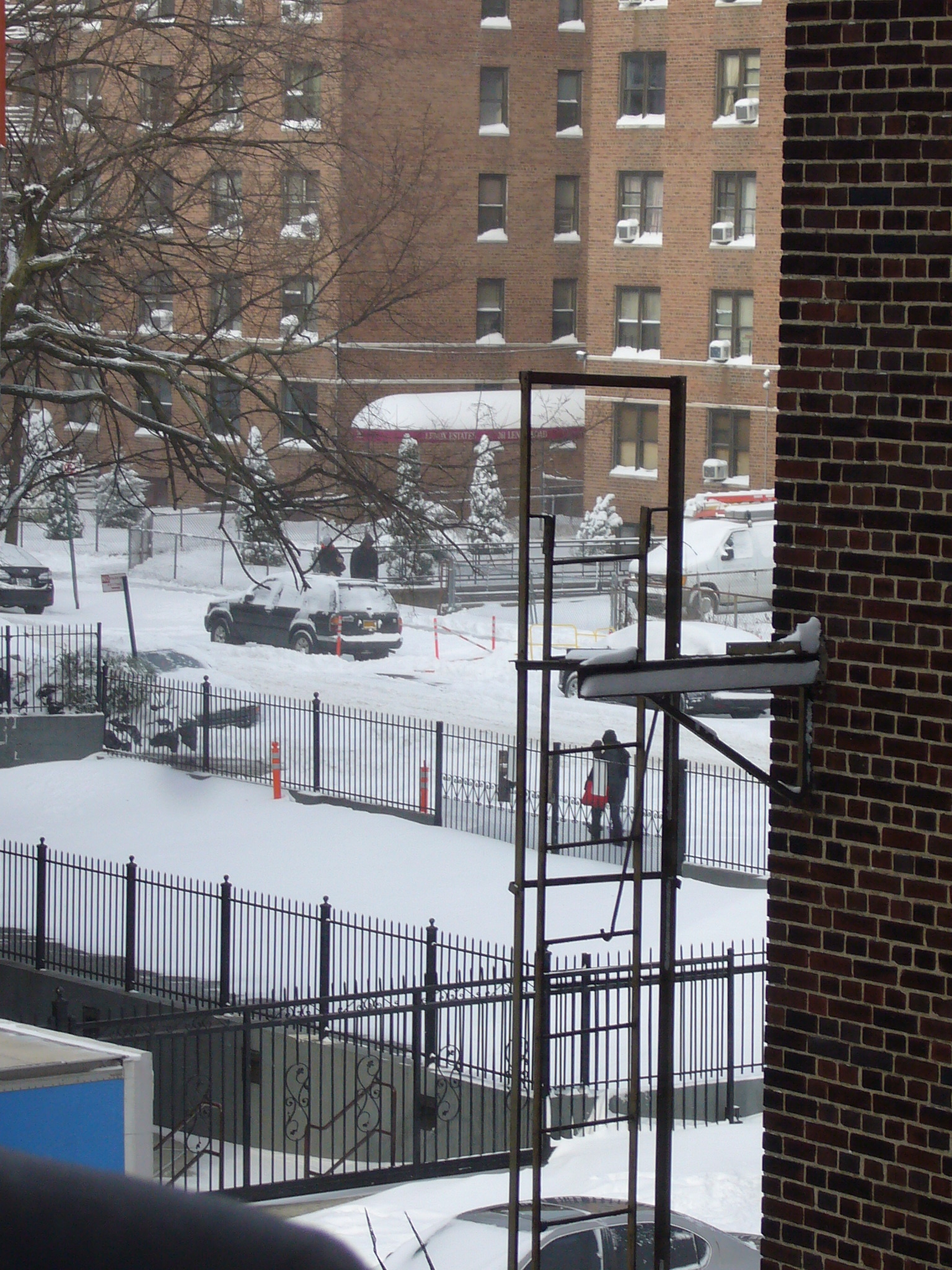
And lo! the heavens opened and offered upon us the blessings of winter:

022

023

And it was good.

025

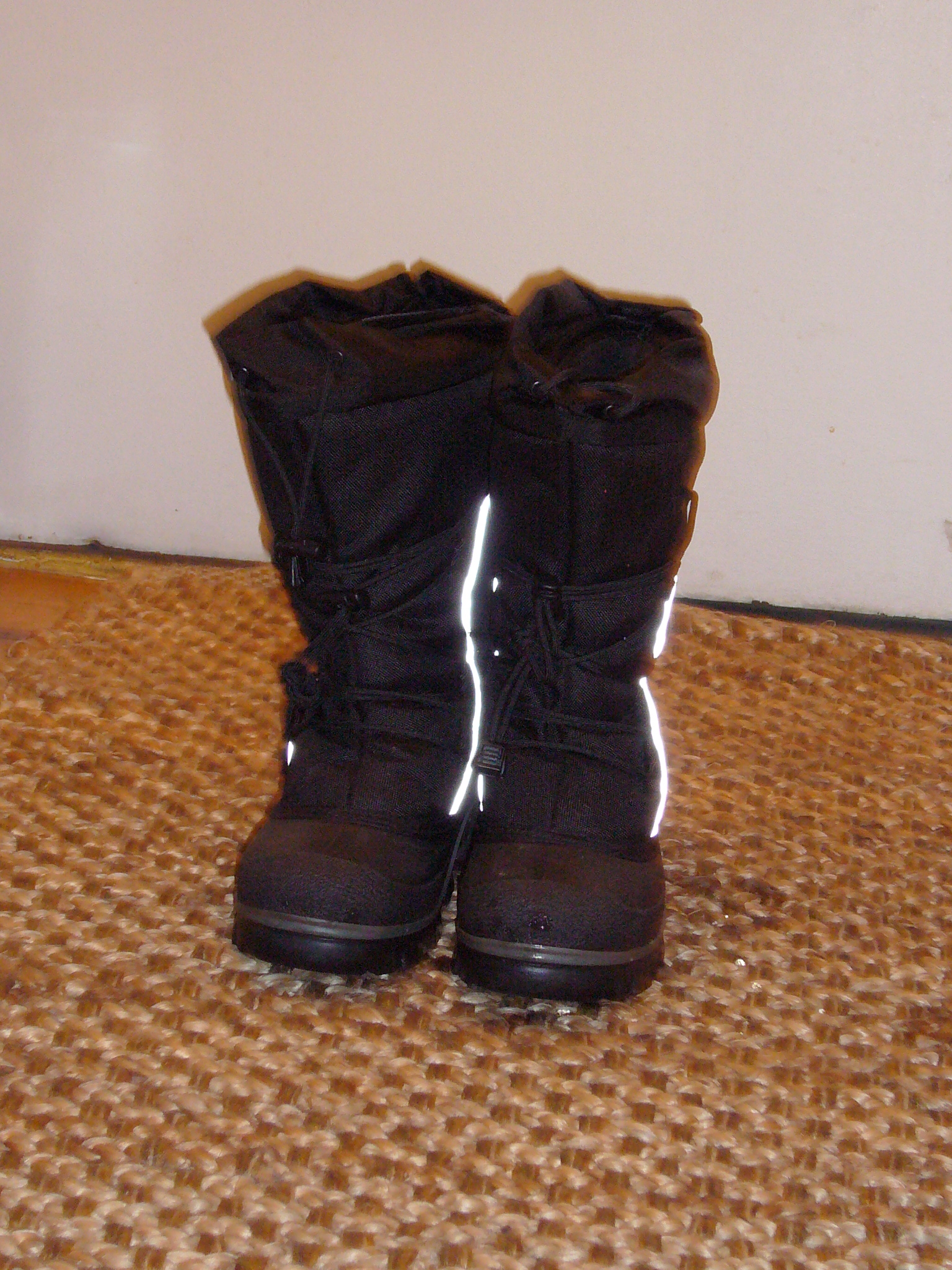
And so I ventured forth into the wintry landscape, donning the footwear of the snowy deep, to deposit my earnings from searches far and wide, and to partake in the gifts of the wind and the cold.

028

And it was good.

Alas and alack, the heavens grew surly and the winds spat warmth and rain upon us, degrading the glorious banks of icy down into mean crystals and slush.

And so will this punishment continue for yet one more day, upon which ending will return the promised cold—unto which we shall rejoice! tho’ yet we mourn the loss of our snowy firmament.


All is quiet on New Year’s Day

1 01 2014

I know how to leave.

A job, a city, a relationship: I can book it with a handshake, a grin, a fare-thee-well, and I’m gone.

I also know how to deal with the run-up. I like rehearsals and planning and while packing is an enormous pain in the tuchus, I’m pretty good with the clearing out and stashing away.

All of this is to say is that I prefer the eves to the day (and not just because I’m a night person). It is the time before that I’m accustomed to, and the anticipation that I enjoy. I’m not bothered by endings—I know everything ends—and, against much of my own agoniste sensibilities, I take the view “it’s done; let’s go”.

Beginnings, on the other hand, I’m not so great at. You’d think that I can end because I know what comes next, but the coming-next is the burden, not the gift, of the ending.

New Year’s Eve? So long and farewell. New Year’s Day?

Oh shit, another year.

But let us take a more poetic look at the back and the forth; from Agha Shahid Ali’s A Fate’s Brief Memoir:

4.

There between the planets the cobwebs thicken
Depart now. Spiders look for my heart lest
I forget the final wreck of all that’s human.

Farewell—and if thou livest or diest!
What poverty lets death exert its affluence?
The earth will receive you, poor honored guest,

and I minding my threadbare subsistence—
poor host who could offer you nothing. What brocades
spun from gasps I tear to polish our instruments. . .

threads searchlit, the universe dazzled, burnished blades. . .
Feel a new sun pounding—Dear Heart, this once!
See the famished sighs I’ll lock into braids.

Don’t forget this sight when by desolate chance
from your breath Belovéd! this evening fades.


So sorry

27 12 2013

I know it’s just killing you that I haven’t posted much this past week, but I’ve been fighting off a low-level migraine for the past, oh, hey, lookit that, week or so, and am too out of sorts to write.

And no, I don’t fake migraines. Not that I’m superstitious or anything, but the few times in the past when I’ve begged off of something due to a “migraine”, I’ve ended up really coming down with a migraine.

So I don’t mess with that shit anymore.

Tummy-aches, on the other hand. . . .


Merry happy peaceful

25 12 2013

From Absurd Brooklyn.

052

Since we don’t actually have snow in BK today, let’s just call this “aspirational”.

All of it.

xo


Hit me with your best shot.

11 12 2013

There are reasons I stopped doing shots.

Pity I didn’t remember those reasons last night.


Hey you

28 11 2013

Happy Thanksgiving.

006

016

I hope your critters are more cooperative than mine.


What if God was one of us

5 11 2013

I’m one of those don’t-hate-religion non-religious types. Most of the time.

And then I read smug shit like this:

To a person, the new atheists hold that God is some being in the world, the maximum instance, if you want, of the category of “being.” But this is precisely what Aquinas and serious thinkers in all of the great theistic traditions hold that God is not. Thomas explicitly states that God is not in any genus, including that most generic genus of all, namely being. He is not one thing or individual — however supreme — among many. Rather, God is, in Aquinas’s pithy Latin phrase, esse ipsum subsistens, the sheer act of being itself.

I’m all about being, so you’d think I’d be all over this. You’d be wrong.

Hell, I’ve read Heidegger, and even if I can’t stop myself from muttering “Nazi gasbag” every time I pick him up, I do think he is worth picking up. It’s tough to talk being without talking nonsense, and while ol’ Martin (that “Nazi gasbag”) peddles his share of nonsense, he does also manage to make sense. Unlike Robert Barron.

God is not a supreme item within the universe or alongside of it; rather, God is the sheer ocean of being from whose fullness the universe in its entirety exists.

Actually, this does make a kind of sense: God is everything, such that without God, there is nothing. It’s a handy bit of sleight-o-hand: How does one know God exist? Because without God, there would be nothing. Easy-peasy.

It’s not a bad tautology, as tautologies go, but, like Pascal’s wager or Lewis’s trilemma, it seeks to lock down not just the answer to a question, but the questions themselves. This is THE question, one is told, and no follow-ups and no other possible interpretations, which might lead to other possible responses, are allowed. No questioning the question.

Barron allows that science allows us to learn a great deal about our material reality. The problem, he says, is that these materials are themselves “contingent”, i.e., dependent upon another reality rather than being real in and of themselves. How does he know this? God-is-everything!

We are surrounded on all sides by things that exist but that don’t have to exist.

[…]

Now a moment’s meditation reveals that all of the conditioning elements that I mentioned are themselves, in similar ways, contingent. They don’t explain their existence any more than the computer does. Therefore, unless we permanently postpone the explanation, we have to come, by logical deduction, to some reality which is not contingent and whose very nature is to exist.

Um, no. Perhaps the explanation is that everything is contingent, nothing is necessary, and existence itself a kind of chance, nothing more.

Barron accuses skeptics of incurosity and irrationality for not bothering with the question of why is there something rather than nothing, but not having an answer doesn’t mean the question isn’t asked; not all questions are contingent upon an answer.

As for Why should the universe exist at all? Who says anything about “should”? It does, for now, and for awhile longer. If it someday ends, it doesn’t mean it never existed at all.

Same goes for us. We don’t have to be here, and yet we are, for now. So what are we to do with this chance?

That, to me, is the real question, and wonder, of being.



Baby you can drive my car

4 11 2013

Scapegoats are incredibly useful.

Not when they’re people—then scapegoating is horrible—but when they’re an event or a thing, they allow you to compartmentalize and carry away a whole carload of bad feelings.

Emily Chapman scapegoats Taylor Swift, in particular Swifts’s song “Twenty Two.”

The first time I heard Taylor Swift singing about the carefree fun of being 22 after I realized that my mother was really going to die, I punched the radio off. Like, actually hit my radio dial with some force. I regretted this later, since I drive a Civic and it’s not really built for punching.

“Fuck you,” I yelled at her, at the song, at the stupid top-40 radio station that was playing it. For good measure, I repeated it: “Fuck you, fuck you, fuck you.” Then, in the parking lot of the Tex-Mex restaurant nearest to what was still my parents’ house, I broke down and cried.

A pop song is a fine target for one’s anguish: plenty of opportunities to express one’s loathing, and to deal, however indirectly, with whatever drives that hate.

I was mad at the cancer for killing my mom, and I was mad at myself for not being better at helping my family take care of her, and I was mad at Taylor Swift for reminding me of all of that.

But I couldn’t fix any of that. So instead I developed intense fantasies of stealing Taylor Swift’s weird smashed birthday cake, and continued to bruise my hands on my car’s dash.

I created a scapegoat to deal with my far-less-traumatizing memories of New Mexico. I don’t regret my year-long sojourn in Albuquerque, but it was a terrible decision to move there, and I dealt with all kinds of (relatively minor) shit while living there.

I also had a lot of fun and met some great people, so how to keep the shit from stinking up the good memories? I put them in a car—a Volkswagon, to be exact.

I’d bought a 1973 Volkswagon while I lived there—3 or 4 gears, I can’t remember—and sold it before moving back to Minneapolis. I was a jumble during this entire period, and didn’t know how to deal with that jumbledness.

The solution? Pack all of my negative New Mexico experiences into that Volkswagon, and get my hate on for that brand.

And it worked, beautifully. I could hate VWs to my heart’s content: I no longer owned a car and was in no position to buy one, and the car I did regularly drive, one borrowed from my friend J., was a Nissan.

“I hate Volkswagons/Volkswagons suck/blah blah/mumble/snore.” It kept me from letting any anxiety over that terrible decision bleed into, well, into the regular anxiety I had in returning to grad school. It was a useful distraction.

And then, after awhile (okay, some years), the hate faded, and VWs became just another car. The scapegoat served its purpose.

It allowed me to offload some dread, and kept that dread away from me long enough for it to shrink into a kind of bemused rue.

So it was stupid to move to Albuquerque. Ah, well. It was worth it.