This is ourselves

12 01 2016

I was never a huge fan of David Bowie’s.

I mean, I liked his music, had a few records, and generally enjoyed his work, but I was never a super-fan, and never had a full-on Bowie fever.

So why am I so sad today? And why can’t I stop reading about him?

~~~

David Bowie is actually associated with one of my worst memories from high school.

I wanted to be the yearbook editor my senior year. I’d started working on the yearbook staff when I was a freshman (which frosh usually didn’t do), was generally acknowledged to be ‘the writer’ in my class (not that hard, really, in a class of 150), and fully expected that the adviser, Ms. G., would appoint me.

She did not.*

L. and T. were appointed instead, and I’d be pissed about it to this today had they not a) put together a kick-ass yearbook; and b) treated me really, really well, allowing me to contribute in all kinds of way. They were champs.

Anyway, my idea was to create a yearbook around the lyrics to “Changes”—which is how Bowie gets dragged into this bad memory.

I have no idea whether or not this would have worked: it could have been amazing, it could have sucked, it could have been Eh.

Woulda liked the chance to have found out.

(*She had her reasons, which were legit. Still. . . .)

~~~

I’ve said “Under Pressure” is one of my favorite guilty pleasures, but today I’ve read all kinds of pieces holding that song out as some kind of genius.

I don’t think it’s genius, but yeah, it is a good pop song, undeserving of the guilty-pleasure label.

~~~

One good thing that’s come from all this reading today is that I found, courtesy of the Huffington Post, a couple of videos of Bowie playing with Arcade Fire.

First I saw this one, one of Bowie’s songs:

Then one of Arcade Fire’s:

I like Arcade Fire’s cds just fine, but watching them live, man, I realllly want to see them live.

What it would have been like to see them live with Bowie.

~~~

I think the main reason I considered “Under Pressure” a guilty pleasure is that every time I hear it I tear up.

I cannot handle my own tears, cannot handle that I am moved to tears.

~~~

It’s kind of astonishing how amazing a singer Bowie was, given that he didn’t have much of a voice.

He’s not like Leonard Cohen, who can’t sing at all, but if I were asked for the best straight-up voices in pop, I wouldn’t name Bowie.

But oh, could he sing, so many different types of songs, with so many different types of singers. Some of these collaborations (Arcade Fire) work better than others (Mick Jagger), it wasn’t down to him.

Something about that thin reed, stretched across the universe.

~~~

“Space Oddity” reminds me of John Lennon. I don’t know why. Maybe I heard it while thinking about Lennon’s death.

Or maybe it just reminds me of high school.

It’s not every time I hear the song I’m reeled back, but sometimes, sometimes I’m in the parking lot at Sheboygan Falls High School, Bowie on the car radio, singing And I’m sitting in my tin can. . . .

~~~

“Under Pressure” is about love, after all.

And love, I don’t know what to do with love.

Thus my chagrin over my tears, my chagrin over love.

~~~

And all of the work he’s done, all of the chances he took, all he gave and all he withheld, all he hid and all he revealed.

David Bowie, 1947-2016, was a Starman, a man who fell to earth, an alien, an artist, but most of all, most of all, David Bowie was a human being.


Cheese, glorious cheese

9 01 2016

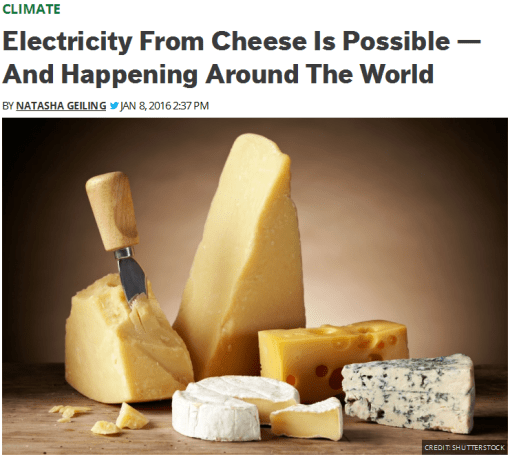
How could this not be wonderful?

cheese electricityCoffee, chocolate, and cheese: the three Cs that make life worth living

~~~

Sorry I haven’t been posting much. I’ve had ideas, just not the oomph.

I’d say I made a New Year’s resolution to be more disciplined, but y’all know I’m too lazy for that. . . .


Well, something’s lost, but something’s gained

26 11 2015

I went to the Neue Galerie yesterday to see the Berlin Metropolis 1918-1933 exhibit—but, alas, the exhibit was closed.

On a Wednesday! (I thought Mondays were when museums snoozed.)

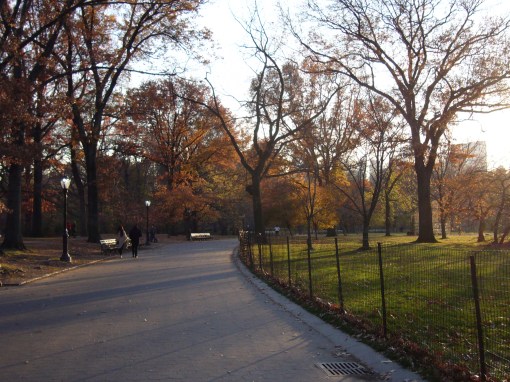
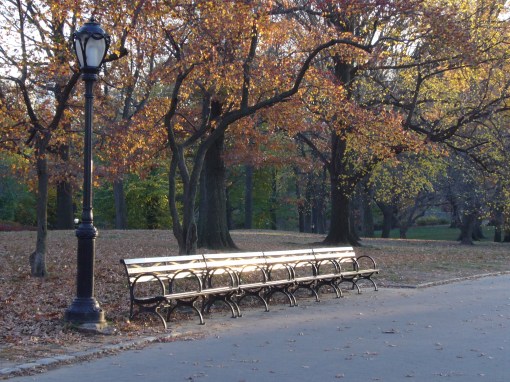
Anyway, the upside to that downer was that it was early enough to stroll through the park.

I haven’t been through Central Park in, oh, a year, maybe? My favorite part is the very north, but angling down from East 85th to 72nd and Central Park West was still lovely.

015

017

020

024

Once I hit the street again I kept walking west until I hit the train station. There were a lot of people out, but I’ve learned how to look around while dodging oncoming pedestrians; all I could think, as I gazed at the sculpted ironwork and stately facades, the cheeky cornices and inscrutable reliefs, was Oh, this really is a beautiful city.

I bitch a lot about my life—I’m middle-aged and living like a graduate student, I’ve tanked my own career—but I’m living in a city that I’ve loved since I was young, and teaching students from around the world at a city university which is open to them all.

I really don’t know life at all—maybe I never will—but I’m all right. I’m all right.

May you live a beautiful life in a beautiful city, however strange it all may be.


Black coffee

13 10 2015

Have I mentioned how I like my coffee?

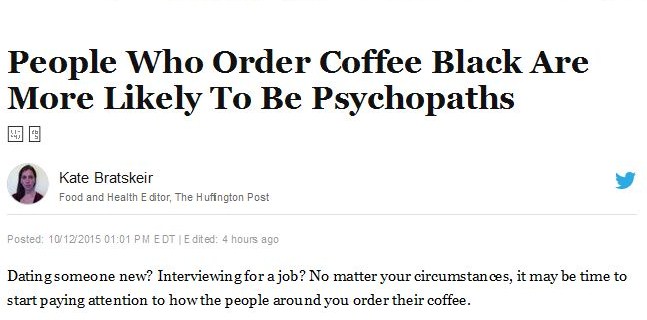
'People Who Order Coffee Black Are More Likely To Be Psychopaths'

I learned the hard way that, in New York, if you want a black coffee, you have to specify ‘black coffee, no sugar’.

‘No cream’ is implied in black coffee, but, unlike elsewhere, ‘no sugar’ is not. You must be clear.

(‘Light and sweet’, by the way, means hop that hot caffeine up on cream—and it will often/always be real cream—and multiple scoopfuls of sugar.)

If the coffee slinger doesn’t know you, s/he’ll repeat this back you, skeptical: ‘Black coffee, no sugar?’

Again, this must be confirmed: ‘No sugar.’

If you buy coffee often enough at the same place, your java dealer will remember you by saying ‘black coffee, right? no sugar?”, then grin when you confirm this is so.

I very occasionally drink coffee and cream—a shot of Bailey’s in a mug of joe is a lovely winter drink—but sugar makes it unpalatable.  I once threw out a large cuppa because I had simply ordered a black coffee, and the server helpfully included the sugar.

That was a sad day.

It was also instructive, as I never made that mistake again.

~~~

I think I’ve mentioned this story before, but it’s good enough to repeat: A former editor of mine at The Daily Cardinal once said ‘I hate coffee, but when I drink it, I drink it black, because real women drink it black.’

Now that’s a role model.


I hate you, you hate me

30 09 2015

This is a nightmare-in-waiting: a human-rating app.

And it’s called peeple. (Of course it is.)

“So, you can’t please everybody, but if you’re a business owner, or you’re a professional, or you’re that young urbanite or you’re that parent looking to make better decisions, you also deserve to see where you could improve,” [peeple CEO and co-founder Julia Cordray] said.

“Think of this as an ability to grow and get some honest feedback.”

Yes, that’s just what the internet is good for: honest feedback.

And if you sign up and decide you don’t like it? Tough.

“Let’s say we allow you to delete your profile and let’s say you are a person of questionable character. All the people of questionable character could hide from the app and then what’s the point?” said Corday, adding those on the app could see benefits for their good scores.

What would be the point, indeed?

And even I, the epistemological nihilist, shrinks from this:

“It doesn’t matter how far apart we are in likes or dislikes,” she tells some bro at a bar in episode 10 [of her YouTube series]. “All that matters is what people say about us.”

AAAAAAAAAAAAAAAAAAAAHHHHHHHHHHHHHHHHHHHHHH!!!!!!

h/t Shelby R. King, The Stranger


We’re sailing on a strange sea

15 06 2015

A friend who I thought Had It All. . . doesn’t.

She’ll be okay—she’s the most resilient person I know—but the next few months will be rough for her, and it’s unclear what her life will look like once matters do clear.

I’ve been lucky with friends. My life doesn’t look much like theirs’, but it’s not an issue. Some are married, some own homes, some have kids, some are, like me, alone in a rental, but I’ve never gotten the sense from any of them that how I live is inferior to how they live.

I often think that I live an inferior life. I do compare myself to others, as well as to what I think I could have if-only, and I preface any invitations to visit with the warning I live like a graduate student. Almost 50, and I live like a graduate student.

But what I missed in seeing only my own shortfalls was that the Having It All can be a kind of front. Not a false-front, but the kind that seems sui generis—as if it just happened, and that there was no work, no struggle, no falling-short behind it all.

I think we are all so separate and our lives so distant, and in some ways, we are. But we’re also all just bobbing alongside one another in the wavy deep.


Looking out my window

8 06 2015

Finally got the basil in:

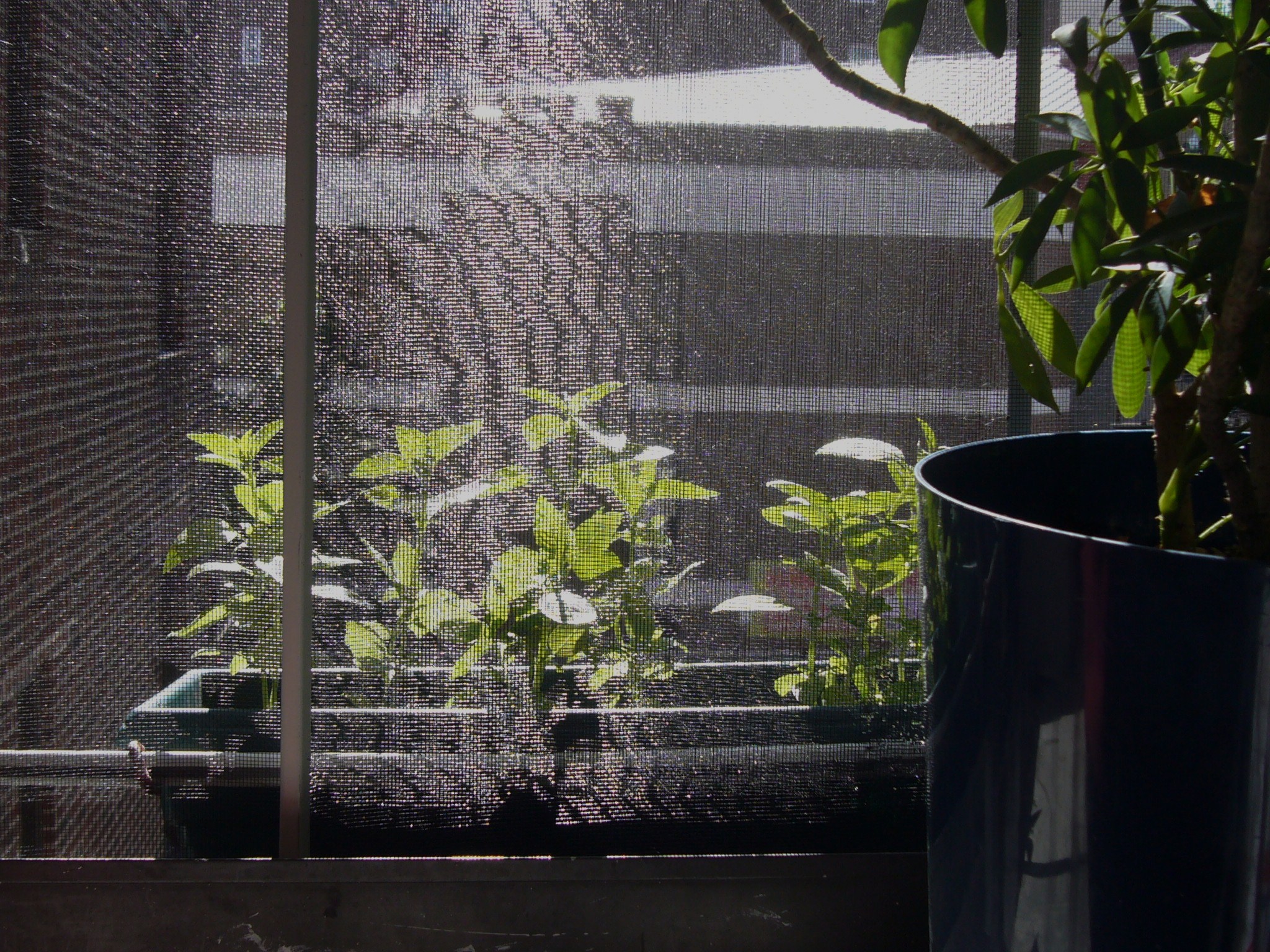
Okay, so I should have taken the picture before replacing the screen.

Okay, so I should have taken the picture before replacing the screen.

I would have done this earlier in the week except that I was a) sick, and, as a result of a, b) tired. And it was rather cool here last week.

Anyway, I only planted 6 plants this year and it seemed a bit sparse, so I checked last year’s blog posts (search=basil), and it looked like I crammed in more plants (which, given that they pretty much gave up the ghost by mid-summer, might have been too many*).

I’m thinkin’ that the nursery last year sold them in 4-packs (and I bought 2) and this year in six-packs, hence the six.

(I did have two 6-packs in hand at one point, but was dubious, so I finally read the little plastic info thingy the nursery sometimes includes in plants, and it said to *plant ’em 8″ apart. Yeah, 12 plants in a 16″ box woulda been too many.)

Anyway, the basil box is back. One of the few unreservedly good things about summer.


Now eleven million later, I was sitting at the bar

3 06 2015

Many years ago, when my friend T. and I were both broke (she no longer is, I’m, well, I ain’t at her level), we’d fantasize about how we’d support ourselves in old age:

“Let’s rob banks, and if we don’t get caught—helloooo Costa Rica. And if we do, then it’s at least three hots and a cot.”

That’s if the lottery didn’t work out for us.

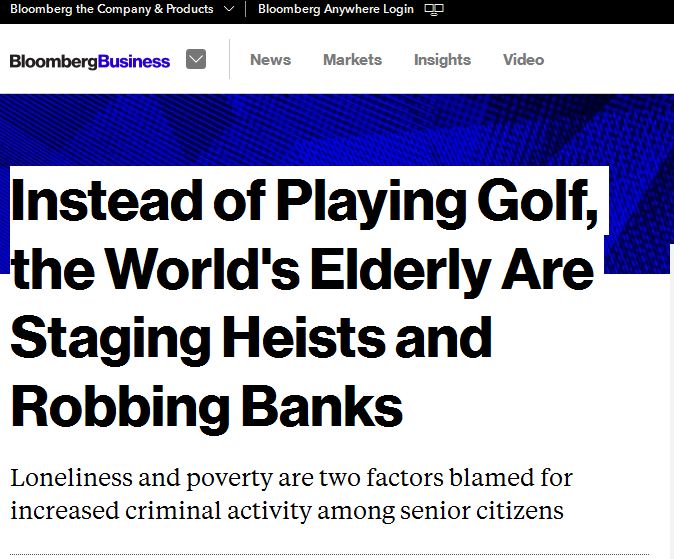
Well, it seems some seniors have beaten us to it:

Elderly Crime Rates Increase - Bloomberg Business'e

Never was much of a golf fan.


In the summertime

31 05 2015

Three signs of summer in the absurd household:

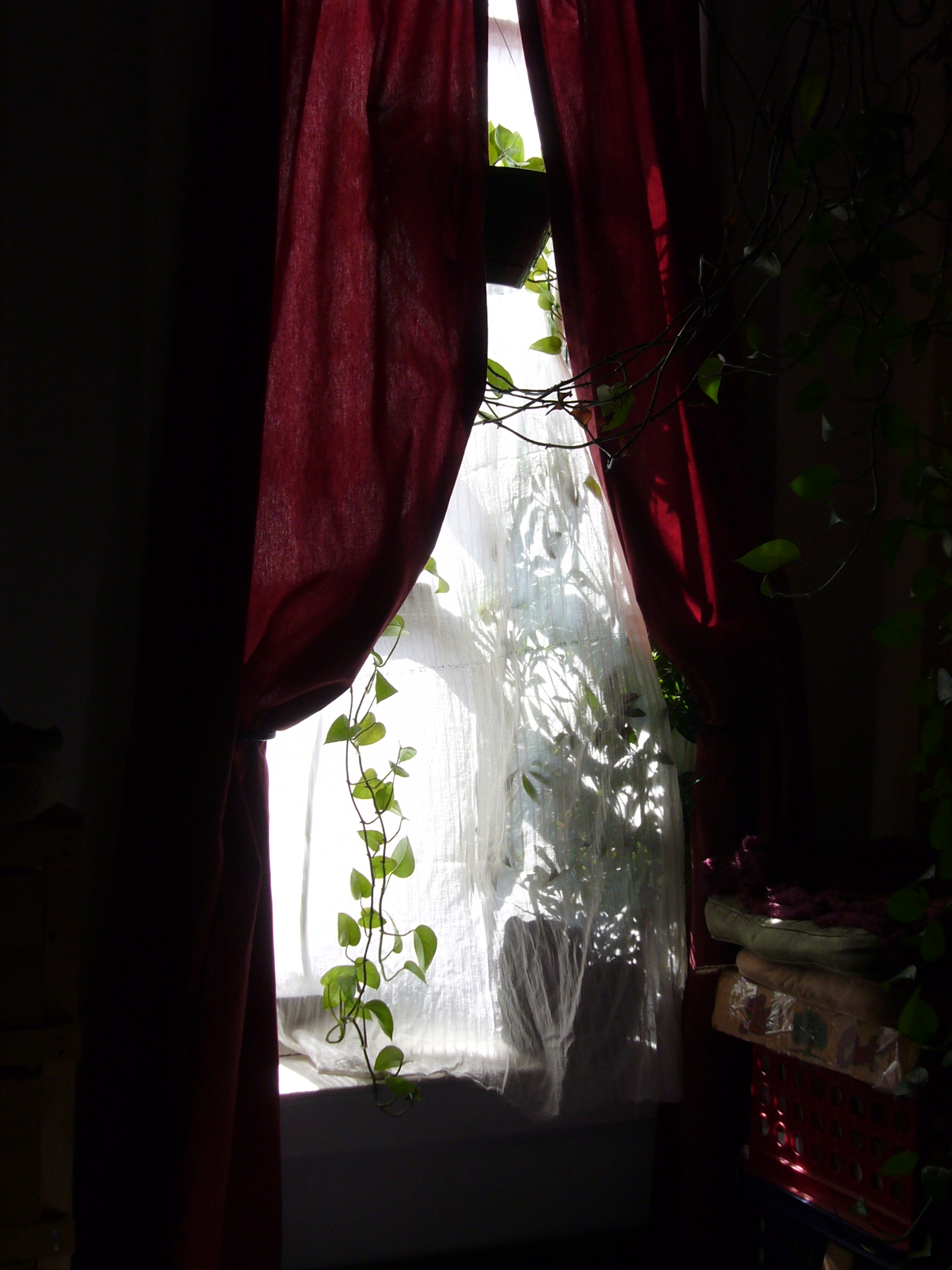
1. Sheer fabric in the windows:

026

2. The summer quilt:

028

3. The shaving of the legs (human, not feline) twice rather than once a week.

Nobody needs to see a picture of that.

Oh, and the heat, of course, the fucking heat.

How could I forget.


Sitting in a tin can

12 05 2015

Okay, so, a question for those in favor of life-extension: why?

Is this just about “more”: more time to do more things, see more sights, experience more experiences? That if you could live to 1000 years you could do so much more than if you could live only to 100?

I asked this question to my intro-level bioethics students today, and for those in favor, the notion of “more” came into play.

But then there was the issue of how those 1000 years would play out, relative to a life lived within the confines of a century. Would you reach adulthood at ~20, as we do today, and then live 980 years as an adult? Or would live just be stretched, such that instead of two decades to reach adulthood, you’d take 2 centuries?

And if the latter’s the case, then, really, aren’t you just living life much more slowly—playing the same record at very low rpms, as opposed to playing many more records?

And even if you were able to do more—if you reached adulthood, and then the aging process slowed—what about that more is better? If all that happens by living 10x as long is that you get to do 10x as much as the same things you already do, then. . . what? Instead of 15 jobs you have 150, or instead of 15 sexual partners you have 150, or instead of 1000 fantastic meals you have 10,000—is life-extension really just about extension? about the ability to do more. . . of the same?

Does your life change substantively by being able to do more of the same? Or is it really just the same, only longer?

The idea of extending life to do more of the same seems to me, someone who sees life as an equivocal good, as not worth it. Living some magnitude longer would, to someone like me, only make sense if living 1000 years allowed you to do things you couldn’t otherwise do.

Like space travel. Really.

Right now we can send people into near space. We may at some point in the next few decades figure out how to set up an outpost on the moon, and some are already talking about colonizing Mars, but even Mars settlement would likely be a one-way trip, as almost certainly would be anything further out: You’d live long enough to get there (wherever “there” is), but not enough to come back.

Live a millennium, however, and you could go and come back. Can’t do that with a mere 100 years.

Beside that, however, and it seems that everything you could do in a thousand years is just a magnification of what you could do in a hundred. But with all that more, it’s still nothing more than that.

~~~

There is another way to look at life-extension, of course, and that’s an a compensation for a lack. That is, we know that people can live more than 100 years, but if someone dies at 85, it might be said that she had a good go-round.

If someone dies at 45, however, well, that seems a bit young. And there are populations around the globe—not as many as there used to be, but still there—where the average life-expectancy is below 50 years of age.

Would altering our social practices such that life-expectancy is raised for those at the low-end count as life-extension? Or is life-extension something beyond the (current) outer-bounds of life-expectancy?

And if one is good, why not the other?

~~~

I’m not convinced of the equivalence implied by that last question, but I can’t quite dismiss it, either.

There might be some kind of curve of “more” that goes up and up—that is, one gains something that he wouldn’t have had before—and then after a certain point, flattens out.

Alas, even if one were to accept this more-curve in theory, there is the little matter of determining that “after a certain point” point.

And the immortalists, well, the immortalists would say that even if does flatten out, that one continues to exist at all is all that matters.

To which this equivocationist can only say, Huh.