Listen to the music: No I don’t want to hear it

13 11 2012

Four hundred and sixty.

That’s how many cds were stolen, four hundred and sixty: 407 pop, et. al., and 53 classical. Of those, I replaced 276 of the stolen pop, and 22 of the stolen classical—which means of course, that 131 pop and 31 classical were not replaced.

I’m no longer exactly sure how my cds are arranged—since they’re now all in my wine-box bureau, i.e., hidden away, I’m much less likely to rearrange them by various genres—but it looks as if my jazz, classical, traditional, and perhaps soundtracks are separated from the pop, blues, and electronica stuff.

So, had my collection not been pilfered, I would have already listened to:

1. Dot Allison, Afterglow
2. American Music Club, Mercury
3. Laurie Anderson, Mister Heartbreak
4. Laurie Anderson, Home of the Brave
5. Laurie Anderson, The Ugly One With the Jewels and Other Stories
6. The Band, The Last Waltz

I would have been able to replace all of these from the used bins while I was living in Montreal, but for whatever reason, I chose not to.

Right after the burglary, I was mad to rebuild my collection exactly as it had been, title for title, whether or not I had listened to or even much liked the lost cd. After awhile, however, I relaxed, and while browsing for the gone-away cds would also be on the lookout for new (used) discs that I wanted more than the old-used discs.

I do remember that I wasn’t terribly impressed with Laurie Anderson’s Mister Heartbreak, and while I liked Dot Allison’s cd, there were always others that, on my scavenges, I found more interesting. I can always get that later, I thought.

Yes, I did have renter’s insurance, but there was a limit as to the dollar amount of the cds they’d replace. I bought extra coverage, but it still wasn’t enough to pay for everything. (I’m not complaining: my insurer dealt with me quickly and didn’t contest any of my claims.) Anyway, that my coverage was limited meant that I couldn’t just stroll to the HMV and load up on [outrageously high-priced] new cds.

That was fine, actually, as I preferred with both cds and books* to prowl the used shops. I’m not much of either a shopper or a hunter, but my atavistic impulses emerge at the challenge of trying to find what I want in the bins and on the shelves.

Then there is the added thrill of coming across something that just looks. . . intriguing, and taking it home for the hell of it. Sure, that can happen at a new-goods store, but it seems that kismet is more likely at a hodgepodge kinda joint.

So while I didn’t  replace 162 of the cds (although there are a few I couldn’t find and still pine for), I did end up finding room for hundreds of cds I might not have otherwise.

On the whole, I’d rather I hadn’t been burglarized, but with the music, at least, the loss led to something more.

*Oddly, not one of my books was stolen. I wonder why that was. . . .
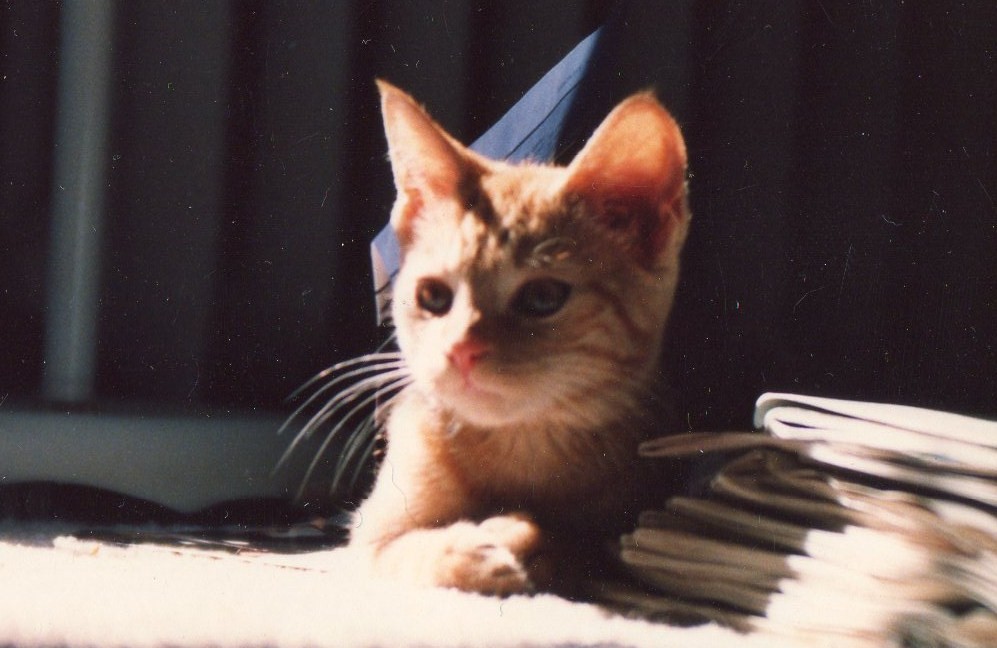


We might as well try: what’s life?

22 07 2012

Is life good?

Is it something to be desired, a good in and of itself, something to be drawn out as long as possible?

I don’t know.

Yes, yesterday I noted that every killing lead to a smaller world, which, given my world-centric views, could reasonably be taken to be a bad thing. And it is. But I don’t think death itself is a bad thing, and if death itself isn’t a bad thing, then life itself may not be a good thing.

Not that life is a bad thing; it’s simply life and death are neither good nor bad, but part of the necessary conditions (biology, mortality) of our existence—conditions which themselves are, well, to repurpose a quote from a mad German, beyond good and evil. We enter the world through birth and exit through death, and neither the entrance nor the exit is a moral issue. We have no say in our births and that we die is inevitable; it is difficult to argue the morality of matters utterly beyond one’s control.

I didn’t always think this way; I once thought that my life was bad, and my ongoing existence both a symbol of my moral failure to and proof of the need to end it. I purchased days against weeks, weeks against months, months against years—until the years piled up and the credit ran out and spent from the running and loathing I lay myself out and whispered, finally, enough.

Funnily enough, the ending wasn’t the end. I claim no mastery over the moment; it was, simply, a moment, a leaf blown this way rather than that, life, not death. I picked the leaf up, that’s all; I would have picked that leaf up, regardless.

Did I “choose” life? No. I recognized it, recognized it as mine, and said, Well then. Enough.

Would killing myself have been a lessening? I didn’t see it that way, then, but, yes, I guess it would have been—not for me, but for those around me, who cared about me. My world prior to the turning had already been lessened; my suicide would simply have capped off the decades-long hollowing out of my world.

So now I live. I don’t think it’s good that I live or bad that I would have died, but I also don’t think that it’s bad that I live or good that I would have died. I take my life as a given—not a gift, but something simply there—and recognizing it as such, try to do something more with it.


Where is the tenderness

28 11 2011

I felt such longing.

What to do with such a feeling, especially since it had been so long since I longed for anything? And why the longing, especially in response to the last, short scene of an uneven television show?

Perhaps it was the tenderness of the moment, made all the more poignant by the unexpectedness of it all.

I don’t expect tenderness, don’t expect longing.

No, I have been frozen in fear of my financial burdens, overcome with debts I cannot and am not paying, triaging my money for rent, first, and everything else, second. My two temporary jobs ease me somewhat, but I can’t remember the last time I felt anything other than anxiety.

So this longing, this unexpected desire for, I don’t know, unexpected tenderness, was all the sweeter for revealing that there is still something more to me, something more to this life.


Talkin’ at the Texaco

2 10 2011

Kitty boy is not out of the woods.

He seems to get better, then, ohp, back the other way. He’s not in crisis, but that the improvement isn’t steady concerns me. I’m trying a variety of home remedies—yes, even after taking in the admonitions for a vet to check him out—which likely have a good shot at taking care of him. That’s the good news.

The bad news is that this problem will likely recur, such that prevention will have to be worked into his everyday diet. He needs to drink more water and I need to increase his acid intake.

Here’s hopin’ Jasper gets used to salt and cranberries.

~~~~~

Good weekend for sports in Wisconsin.

Badgers rolled over Nebraska, Brewers are up 2-0 in their 5-game series with the Diamondbacks, and the Packers remain undefeated.

I am deeply ambivalent about sports—brand loyalty is for suckers, blah blah—and in particular, about football, and the evident harm it inflicts on the players. Thus, the cheering isn’t as full-throated as it was in the past, but it’s still there.

Maybe someday I’ll be enlightened enough to let it all go, but in the meantime. . . .

~~~~~

Thanks to Brad DeLong, I was hipped to John Holbo and Belle Waring’s equine-eviseration of libertarianism:

Now, everyone close your eyes and try to imagine a private, profit-making rights-enforcement organization which does not resemble the mafia, a street gang, those pesky fire-fighters/arsonists/looters who used to provide such “services” in old New York and Tokyo, medieval tax-farmers, or a Lendu militia. (In general, if thoughts of the Eastern Congo intrude, I suggest waving them away with the invisible hand and repeating “that’s anarcho-capitalism” several times.) Nothing’s happening but a buzzing noise, right?

Now try it the wishful thinking way. Just wish that we might all live in a state of perfect liberty, free of taxation and intrusive government, and that we should all be wealthier as well as freer. Now wish that people should, despite that lack of any restraint on their actions such as might be formed by policemen, functioning law courts, the SEC, and so on, not spend all their time screwing each other in predictable ways ranging from ordinary rape, through the selling of fraudulent stocks in non-existent ventures, up to the wholesale dumping of mercury in the public water supplies. (I mean, the general stock of water from which people privately draw.) Awesome huh? But it gets better. Now wish that everyone had a pony. Don’t thank me, Thank John.

The and-a-pony bit is explained earlier in the piece; g’head and read the whole thing.

Once again: libertarianism is not a serious political theory; it is at best an adjunct to serious political theory.

~~~~~

I’ve noted in the past that an over-concentration on process to the neglect of substance bleeds politics dry of its very purpose. That said, some attention to process may fruitfully obstruct an over-concentration on ends.

See, for example, presidential freelancing in the so-called war on terror.

President Bush stepped up the use of extraordinary rendition and justified the imprisonment and torture of detainees (even as he denied that beatings, waterboarding, and sleep deprivation were torture) as necessary to securing the dominance security of the United States. He was hailed on the right, booed on the left, and denounced by libertarians of all stripes (n.b.: see, I can say nice things about libertarians!).

President Obama has allegedly stopped the torture and has tried, with varying amounts of effort, to close Guantanamo. He has also authorized far more drone strikes on militant leaders than President Bush ever did, and hailed the assassination of American citizen Anwar al-Awlaki as “another significant milestone in the broader effort to defeat Al Qaeda and its affiliates.” (He presumably did not mourn the death of Samir Khan, another American citizen killed alongside al-Awlaki.) He has been (mutedly) hailed on the right, (mutedly) booed on the left, and denounced by libertarians of all stripes.

I’m not particularly a fan of either al-Awlaki or Khan—violent hatred of the world isn’t my thing—and I do think the citizenship status of al-Awlaki and Khan (and John Walker Lindh and Jose Padilla, for that matter) ought to give any American pause regarding their officially-sanctioned killing. (I leave aside the question of whether the Constitution covers noncitizens; my understanding is that this question is unsettled, juridically.)

But even if you don’t think the 5th Amendment applies in this case, nor that the citizenship of al-Awlaki or Khan matters, what of the matter of presidential power?

Obama apparently consulted with various staffers and legal experts on the legitimacy of such assassinations, but is a consult with one’s staff an apt substitute for legislative debate? Is it enough for the president to say “it’s okay because I say it’s okay”?

And because it was only bad guys who were killed, then, hey, that’s okay, too? Ends justifying the means, and all.

If pure proceduralism is deadly to politics, so too is pure consequentialism—especially in its democratic forms.

~~~~~

Whine whine whine about my life. What am I doing, here I am flailing, here I am failing, what if I moved. . . .

No.

I don’t know if I’ll be in New York forever, but I do know that this is where I need to make my stand. If I were to move anywhere else, it would be too easy to say “oh, if only I were in New York. . .”, and distract myself from the work I need to do.

I am so far past “enough” that I have lapped myself; still, if I’m ever to catch up, I have to stop jumping away from my life.


Why don’t you kill me?

19 06 2011

I am so tired of being a loser.

C. and I were at the end of our leisurely Red Hook/Gowanus ride and finishing our equally leisurely conversation in—yes—a leisurely manner. We had been discussing her novel* and her job and taking classes and the trail detoured into my life.

Which is when I burst out the above statement, along with complaints about being an underachieving dilettante and not extending myself or diving into anything which would  pull something out of me or committing myself, really, to anything.

And it’s so goddamned irritating, I ranted, that I make the same diagnosis over and over and over and still, here I am, grumpy and underachieving and uncommitted.

No, I’m not going to continue the rant, here; besides, you’ve heard it all before: I was stuck for twenty years between suicide and living and now I’m stuck in the not-knowing of living blah blah.

C. suggested that I just get out there and try different things, volunteer, anything to get myself moving and maybe, just maybe, involved. Sound advice, certainly, and nothing I haven’t told myself in previous go-arounds.

But it did occur to me, after we finally split, that I’ve got a real issue with trying to hoard time, so much so it interferes with the just-get-out-there approach: I don’t want to commit because what if I can’t follow through? I don’t want to be inconstant, so better not to be anything at all. What if I run out of time?

Nonsense, I know, at least in prosaic terms. I live in time and can no more grab hold of it than a fish can water. I can control my movements in time, but time itself? Nuh-uh.

Whether I can do anything with this elementary law of physics remains to be seen.

And there’s a flip side: Even as I am a physics-al being, I also know what it likes to live absent time. I’m not talking here of being ‘in the moment’ (although that’s nice when it happens, rare tho’ it is), but when I’m so involved in an activity that I have no consciousness of time.

Which brings me back to the beginning, and writing. C. mentioned that I seemed to be in a fictional frame of mind (oh, the meanings in that observation. . !), and I mentioned a story I had been turning over. I have characters, I said, but not much beyond that; I need to let this sit a bit, see what happens.

But then I noted that in between novel 1 and 2, I started another story, one which I might never get back to, and maybe this story is like that one: the one which prepares me for the next one.

And right then, I thought, Well, I’m not a loser dilettante when I’m writing; I just write.

Thus, that leisurely bike ride and leisurely conversation popped something loose: Start writing again, and the writing will come. Sketching out that story for C. helped me to see that that’s maybe all it will ever be, and that’s okay. Commit to the writing itself, just, just remember that I can commit to the work itself.

Something else will come; something else always comes.

~~~

*Hey, C. it occurred to me that you could work the slingshot into a joke: Your narrator could pick up a slingshot or having someone hand one to her and she could demur, muttering “Too Clan-of-the-Cave Bear.”

Anyway.


I’m a rocket man

14 12 2010

I try to be good, get off the computer for a few hours, and what happens? I miss an entire conversation on science.

Well, goddammit.

(Actually, given that a large portion of the thread was given over to name-calling and trollist cavils, I guess I didn’t miss that much. Still.)

So, science. I am for it.

I am an epistemological nihilist, it’s true, so this support is caveated with the usual cracks and abyssals, but I’m also quite willing to hop right over those chasms to walk among the ruins that compose our human life—and one of our more spectacular ruins is science.

Yes, ‘our’. ‘Our’ because science truly is a human endeavor (even as its dogmatists assert that science can take us outside of ourselves), and as such, there to be claimed by all of us. And it is important to claim it, both against the dogmatists and against those who find nothing of worth in curiosity and rigor, or in experimentation, skepticism, and discovery.

I can only respond to those opposed to discovery with questions and fiction—as we do not inhabit the same world, argument is stillborn—but to the dogmatists and, it must be said, to those who favor curiosity and thus oppose science because they believe science poisons curiosity, I can offer history and reason and ruin.

To offer the whole of that argument is to offer a book; instead, here is the abstract:

We humans have sought to know, and in seeking, have sought to make sense of what we have found. How we make sense has varied—through recourse to myths, common sense, measurement, extrapolation, generalization, systematization, reflection, etc.—and what we make of the sense we make has varied as well. Sometimes we call it truth or religion or wickedness or allegory or interpretation; sometimes we call it science. Sometimes this science is the means, sometimes it is the end, sometimes it is both. In early modern times [in Europe], in the period now known as the Scientific Revolution, science was thought to reveal truths about God, as it also was by those scientists working under the Abbasids; that it also brought technological advance and political and economic gain helped to preserve it against those who argued that a thirst for knowledge was itself corrosive of the faith.

Yet even throughout much of the modern period science was understood as, if no longer an appendage of natural philosophy, as nonetheless a part of a constellation of knowledge which included the arts, literature, and humanities; its practitioners are all a part of the learned class.

This collegiality faded, and now science is understood primarily as comprising the natural sciences and its methods; to the extent some social sciences adopt those methods, they may or may not be admitted to the realm as sciences, albeit as its lesser, ‘softer’, version. That science has a history is barely acknowledged, and it is unclear if scientists (or their learned critics) would consider them as ‘intellectuals’ rather than (mere) technicians, experimentalists, and lab directors.

This separation (and, often, contempt) is lamentable all around. [Natural] science is more than its tools and methods, involves more [hermeneutic] interpretation than the experimentalists may admit of, and requires greater curiosity than its skeptics may allow. But if we want to know, if we humans truly seek a human science (and, again, I would argue there is no other), then we have to prevent science from sliding all the way into scientism. Some think it’s already so technics-shriveled, that it is already mere methodological fetishism; I disagree.

This saving gesture doesn’t require that artists now refer to themselves as scientists or that neurobiologists become novelists. No, this reclamation project (another ruin) would gather the curious back together, to see if we exiles from one another would have anything to say to one another, to see what we could see.

I don’t believe this every day—yesterday, for example, I had no patience for this.

But some days, some days I think we humans could do this. Some days, this is my something more.


If green pears you like. . . why nobody will oppose (pt III)

26 06 2010

It’s been a long time since I believed in my own life.

This is a problem.

Yes, I know (as well as anyone) that I exist, that others recognize me as [absurdbeats], that there are things I can and cannot do, and I claim my rights as a person and as a citizen. Human status is not enough, as Arendt pointed out, for one to be treated well, but in most matters it is necessary for one to claim it—and so I do.

But I haven’t done well in claiming the full range of human possibilities as possibilities for me. My belief in possibilities is so strong as to be fantastical, but belief in making the possible real so weak as to be self-erasing. (Bad dichotomies!)

This isn’t, really, about hopes-and-dreams, but about stating ‘I can do this’ and then acting as if I can do this by actually doing ‘this’. I think about ‘this’, worry over ‘this’, work my way around ‘this’, but truly and practically believe that ‘this’ and me have anything to do with one another? No.

Pathetic.

It drives me crazy, this passivity, but I don’t know how to get past it—even as I have evidence that I have done or accomplished various ‘thises’: I went to college, worked for the college newspaper, demonstrated competence in a variety of intellectual pursuits, was admitted to grad school, FINALLY finished grad school, taught, moved around, and (also FINALLY) moved to New York City. And then, completely unexpectedly, I wrote not one but two reasonably good novels

These were things I wanted, thought about, and did. Evidence, it would appear, for my ability to create my life.

But somewhere along the way I lost that ability to translate my imagination into practice, to shape speculation into something concrete. I have evidence of ability, but fear a reality of inability.

In my two previous posts I mentioned both (internal) dichotomies and structured externalities, each in their own ways markers I could use to track myself. I need. . . something to get my ass moving, but I don’t know what that something is.

One something is financial need, which does work, tho’ not necessarily in the most productive direction. I need to make book, I’ll take a job, any job, just to get through. So, driven by anxiety, I can bring in paychecks, but because I’m driven by anxiety, I’ll take the first thing I can get—which usually means small paychecks which don’t do much to relieve said anxiety. I then may pile on another first-grasp job, which may help me to run even with but never to get ahead of myself.

(As a sidenote, most of this anxiety can be traced to debt incurred in my moves both to Somerville and even more so to Brooklyn. If I could just get on top of this. . . .)

In any case, having two or three jobs and living to work works, in its own way, for awhile, but then I say I moved to NY for this?

Which tells me that even beneath my passivity and anxiety is something which is holding out for a real and not merely simulated life.

It’s there; I just have to find it.


I’m lying by the road/because she cut off all my clothes

2 06 2010

Enough, already. Enough.

Enough with the rules, with the regs, with the rights and wrongs and victims and perps and goods and evils and innocent and damned. Enough.

No, I haven’t deliquesced into a moral puddle on the floor—I’ve got a fan in the window—or lobotomized myself with an icepick*. And I’m as cranky and squint-eyed as ever.

But I’m also finally, finally beginning to understand what Caputo and Vattimo are getting at with their radical hermeneutics and weak theology and the utter necessity of resignation.

A resignation of a particular sort, I hasten to add, one which begins rather than ends inquiry.

Part of this understanding began amidst my adjunct teaching, when I gave up punishing students for handing in work late. Just get it done, I now say. The work matters more than the date.

I could do that because the terms of my contract are clearly defined: I’m paid for x-number of hours, full-stop. I’m not trying to get tenure, not trying to impress colleagues with my dedication to departmental norms, not trying to impress students with how ‘hard’ I am. To get paid, I simply need to fulfill the terms of my contract.

But since I don’t get paid that much, I had to ask, So, why am I doing this? I’m doing this because I like it, because I think it matters, because I think the students should know this, because there is something more in the material itself.

I’m a pretty good teacher—not great, but not bad. But because I am finally learning to clear out the bureaucratic hedges which have occluded my pedagogical sight, I’ve given myself the chance to offer those students a glimpse of . . . of. . . of knowledge, of questions, of human being beyond those hedges.

Ahh, crap, this all sounds. . . woo, and I am most definitely not a fan of woo—metaphysics!—nor am I trying for some kind of vagueness as a way to avoid the hard edges of being. I do, after, still follow rules, still bitch when others don’t (is it really so hard to put your trash in the can?), and still impose rules on my students.

But the rules are provisional, practical in the most rooted sense of the term: as means to ends, not ends in themselves. Will this paper help the students learn something? Yes. Will punishing them for handing it in late serve any purpose? No.

And I’m lucky in my ability to dissolve some of these rules: I don’t have 150 students and two TAs who have their own work. Perhaps if I did I could work out something else, but, honestly, had I gone the tenure-track route at a large school, I almost certainly would have not only left those nice hedges alone, but planted a few more. The point, then, would have been to get tenure, and everything else would have been shaped to serve that purpose.

That’s not a rip on tenure-track faculty—some of my best friends have tenure—but a recognition of how one’s necessities get ordered, how my necessities would have been ordered, and without me quite realizing it.

Perhaps I would have come to it, eventually; perhaps, after earning tenure, I would have thought, Okay, so what was all that for?

This is what Vattimo means by nihilism: the shedding of the unnecessary, the recognition that almost nothing is necessary, so that one is confronted with the question, Now what?

I have resisted this, largely because I like the sharpness of edges, because I do hold to my allegiances, and because I not only do not want to let some people off their hooks, I actively want them to remain on the hook. I think there is a distinction between clear thinking and obsfucation, between teaching and manipulation, and between domination and liberation.

But these are, in the end, practical skills and political positions, and, as much as they matter, there is still that question beyond them: What for?

I don’t have the answers, don’t know if I even know what these answers would look like.

But, still, I am giving up: there’s too much to see.

(*Yes, there really was a type of lobotomy performed with an icepick: the transorbital  lobotomy. I’ve got pictures!)

h/t: J., for the 3pm walkabouts. . . .


Everything! Everything! Everything!

25 05 2010

Blows my mind how little I know. That is most excellent.

I’m not kidding: However much I wish I knew, mm, everything, that there is so much more out there to discover keeps me keepin’ on.

Consider my medieval Euro-history project: I recently finished Charles Freeman’s The Closing of the Western Mind (which is about the transition from the pagan to the Christian era), and man! what a jumble early Christian history is!

I did know that it took awhile for Christianity to gel as an institutional movement, but thought that after the Council of Nicaea in 325 everything was all sewn up until the Great Schism of 1054, and even then, it wasn’t until Luther and Calvin that the [western] Christian fabric was truly rent.

Only I didn’t know what the Council of Nicaea actually accomplished (something to do with the Trinity, maybe? And that Nicene Creed, right?), didn’t know that very little was settled at Nicaea, that the splits between the Eastern and Western churches were evident within a century of Christ’s death, and never knew, frankly, how the Copts fit into all this.

Well.

I still don’t know, frankly, but slowly, slowly, this is all seeping in.

This is how I learn something new.

My approach  is to read promiscuously, trusting that with enough exposure I’ll be able to piece together a particular phenomenon. And I don’t need to dive into deep scholarship at the outset either; solid popular books (like Freeman’s) give me the chance to train my sights, as well as offer a decent bib I can crib. I do prefer that what I read be, you know, good, but even the junk can sometimes be useful, if only as a kind of astringent for my thoughts.

Anyway, that’s how this political theorist began her work with genetics: Snatching every book with the word ‘gene’ in the title and gulping them down, then more slowly working my way toward what, for my purposes, were the most important (or delectable, to continue the metaphor) platters on the table.

I’m still in the gorge phase of my research, slurping up commentary on how orthodoxy was invented and how intertwined it all was with empire; how faith, political power, and obedience to god and man never quite fit together; how misogyny was built into early belief; how anti-Judaism became anti-semitism; and how time itself was changed.

And that’s just the beginning.

A colleague asked where I was going with all of this. I don’t know, I told him. I know there’s something there, but I don’t yet know what it is.

Now that, my friends, is one of the best feelings in the world.


The lion sleeps tonight: one year later

2 05 2010

Chelsea. It’s a year to the day.

1991-2009

The mourning has not gone well. I’ve grieved, and not. I’ve handled it, and not.

I can think of her without tears, but only rarely; because of this, I only rarely think of her.

She does help me with Bean, in trying to do better in recognizing and responding to her needs. I’m patient with Bean in a way I was not always with Chelsea.

I couldn’t see that she was dying, couldn’t see her.

I still can’t, in so many ways.

My sweet Chelsea still has something more to teach me. Perhaps by next year, I can finally let her rest.