Wow unbelievable

18 05 2015

This is too easy.

Autonomous cars will be commonplace by 2025 and have a near monopoly by 2030, and the sweeping change they bring will eclipse every other innovation our society has experienced.

No, and no.

They will cause unprecedented job loss and a fundamental restructuring of our economy, solve large portions of our environmental problems, prevent tens of thousands of deaths per year, save millions of hours with increased productivity, and create entire new industries that we cannot even imagine from our current vantage point.

Possibly, unlikely, unclear, perhaps, unclear, unclear.

The whole piece goes on like this, ending with

But perhaps most exciting for me are the coming inventions, discoveries, and creation of entire new industries that we cannot yet imagine.

 It is exciting to be alive, isn’t it?

Well, beats the alternative, I guess.

I was going to say I don’t want to rain on Mr. Kanter’s driverless-car parade—but of course I do.

Of course I want to smack him upside his head and say “Have you never heard of the steam engine? the telegraph? high-yield agriculture?

ANTIBIOTICS, fer-cryin’-out-loud-from-the-top-of-the-Empire State Building!”

Or how about the freakin’ bar-code, which, while certainly not up there with ANTIBIOTICS (fer cryin’ out loud. . .), is more innovative than a car. Without a driver.

You know what was innovative? The car, that was innovative.

The driverless car? Cool tech, bro, and it may eventually become more popular than the drivered-car, with some of the effects (good and bad) Kanter mentions.

But it’s still a car, still takes up space, still requires roads, still requires traffic infrastructure (signals, policing, snow removal, road work) still requires maintenance, still moves people one or a few at a time.

It’s more of the same, except hands-free.

Maybe my perspective is skewed because I live in a city in which most people get to and from work and wherever without getting behind the wheel. Granted, we enter vehicles (taxis, limos, buses, trains) which someone else is driving, but the idea that one can get from here to there without paying (much) attention to what happens in-between is. . . old.

Perhaps someone living in a place less densely crossed with mass transit or car-service options might be able to grab the sweepiness of the no-driver-car than I can—maybe if I had to drive from Sheboygan Falls to Milwaukee every day, I’d be more excited at the thought of spacing out while hurtling up and down I-43.

But one of the advantages Kanter lists of driverless cars—that these would also be ownerless cars—would likely not be seen as an advantage by those in rural areas and small towns, not least because it’s not clear that there would be sufficient population density in a place like Sheboygan County to make it worthwhile for some company to set up a fleet of to-rent cars. And even if they did, I doubt that people would be willing to wait for that car to show up from the other side of the county just so they could make a beer run.

And hey: why would driverless cars necessarily be ownerless? I mean, maybe they could be, but why would not-driving a car make you want to not-own a car? Yeah, owning a car in New York City is a pain, but the rest of the country is most definitely not the city.

I could go on—no, really, I could—but who wants that. So let me end by saying, yeah, driverless cars might someday take over the road, and maybe that’ll lead to some of the (not-so-) nifty things Kanter mentions in his essay.

But it’s still a car. On a road.

Ain’t nothin’ new about that.

~~~

h/t Robert Farley, Lawyers, Guns & Money


All things weird and wonderful, 51

14 05 2015

I don’t understand this.

But I laughed.

Redditor In4theKill

So, just go with it.

~~~

h/t Cute Overload


Sitting in a tin can

12 05 2015

Okay, so, a question for those in favor of life-extension: why?

Is this just about “more”: more time to do more things, see more sights, experience more experiences? That if you could live to 1000 years you could do so much more than if you could live only to 100?

I asked this question to my intro-level bioethics students today, and for those in favor, the notion of “more” came into play.

But then there was the issue of how those 1000 years would play out, relative to a life lived within the confines of a century. Would you reach adulthood at ~20, as we do today, and then live 980 years as an adult? Or would live just be stretched, such that instead of two decades to reach adulthood, you’d take 2 centuries?

And if the latter’s the case, then, really, aren’t you just living life much more slowly—playing the same record at very low rpms, as opposed to playing many more records?

And even if you were able to do more—if you reached adulthood, and then the aging process slowed—what about that more is better? If all that happens by living 10x as long is that you get to do 10x as much as the same things you already do, then. . . what? Instead of 15 jobs you have 150, or instead of 15 sexual partners you have 150, or instead of 1000 fantastic meals you have 10,000—is life-extension really just about extension? about the ability to do more. . . of the same?

Does your life change substantively by being able to do more of the same? Or is it really just the same, only longer?

The idea of extending life to do more of the same seems to me, someone who sees life as an equivocal good, as not worth it. Living some magnitude longer would, to someone like me, only make sense if living 1000 years allowed you to do things you couldn’t otherwise do.

Like space travel. Really.

Right now we can send people into near space. We may at some point in the next few decades figure out how to set up an outpost on the moon, and some are already talking about colonizing Mars, but even Mars settlement would likely be a one-way trip, as almost certainly would be anything further out: You’d live long enough to get there (wherever “there” is), but not enough to come back.

Live a millennium, however, and you could go and come back. Can’t do that with a mere 100 years.

Beside that, however, and it seems that everything you could do in a thousand years is just a magnification of what you could do in a hundred. But with all that more, it’s still nothing more than that.

~~~

There is another way to look at life-extension, of course, and that’s an a compensation for a lack. That is, we know that people can live more than 100 years, but if someone dies at 85, it might be said that she had a good go-round.

If someone dies at 45, however, well, that seems a bit young. And there are populations around the globe—not as many as there used to be, but still there—where the average life-expectancy is below 50 years of age.

Would altering our social practices such that life-expectancy is raised for those at the low-end count as life-extension? Or is life-extension something beyond the (current) outer-bounds of life-expectancy?

And if one is good, why not the other?

~~~

I’m not convinced of the equivalence implied by that last question, but I can’t quite dismiss it, either.

There might be some kind of curve of “more” that goes up and up—that is, one gains something that he wouldn’t have had before—and then after a certain point, flattens out.

Alas, even if one were to accept this more-curve in theory, there is the little matter of determining that “after a certain point” point.

And the immortalists, well, the immortalists would say that even if does flatten out, that one continues to exist at all is all that matters.

To which this equivocationist can only say, Huh.


And I said, nothing

11 05 2015

So this is what happens.

I have ideas, my thoughts scatter, I write nothing.

Next day, maybe I have thoughts, maybe I’m tired, I write nothing.

Then I’m busy, then maybe crabby, then maybe with the ideas; but: nothing.

This is how it goes for blogging, but it could be anything: The following days are some combination of plans, fatigue, and moodiness, mixed in with active avoidance of the thing I’ve been avoiding, thus creating anxiety about both the thing and the avoiding of the thing.

Nothing nothing (I should be doing something) nothing (something!) nothing (do it now!) nothing nothing nothing.

Oh, fuck it, I gotta do something, just to get over the not-doing-anything.

So, yes, substantively a bullshit blog entry, but as a tactic, it should get me movin’ again.


If you’ll be my enemy

29 04 2015

Some of us are boundary-patrollers, and some of us are boundary-trespassers (and some of us just don’t think much about boundaries, one way or the other).

I can be frantic when it comes to personal boundaries. Yes, I share some pretty personal stuff on this blog, but there’s a lot (mostly boring, I must say), that I don’t care to share and, really, the crucial issue is whether or not I have the choice of what to reveal.

But when it comes to partisan issues, man, I am not at all interested in boundary patrol. I might think you’re a shitty leftist if you’re anti-union or not much of a feminist if you support anti-abortion legislation, but beyond that not-at-all-enforceable judgement, well, I’m not going to try to enforce anything.

It’s not that boundary-patrol isn’t necessary—it helps to be able to distinguish between x and not-x—but that I don’t think it necessary for me to engage in it. Hell, I’ll help to set up those boundaries—I’m pretty happy to draw lines all over the place—but if someone wants to wander across them, I’ll wave ’em through.

In any case, there are more than enough people out there who thrill in shrieking Halt! Who goes there? at the wanderers that I don’t worry about shirking guard duty. Or in trespassing some boundaries m’self.

I don’t know how much of a change this is for me. I could be strident when young and can be strident now, but I don’t know that I ever had much of a passion for cleaning out My Side. Maybe I did and I’ve just forgotten, but I just don’t recall ever taking on the role of Ideological Bouncer.

And I’m in no mood to start now, especially not since embracing the whole messiness thing—smudges and breaks are pretty much unavoidable. Add to that my general sense that if you’re not trying to kill/maim me, you’re not my enemy and, well, it’s no surprise that, absent an emergency, I won’t be (wo)manning the ramparts.

Makes me a pretty shitty militant, I guess (which is probably why I’m not a militant).

Anyway, all of this is a way of sidling up to our latest version of the US Culture Wars: Religion Edition.

Rod Dreher is, predictably, very upset by the rough beast of same-sex equality slouching toward Bethlehem: there are lines in Christianity and barricades in morality which simply must not be crossed, and woe the blood-dimmed tide about to be unloosed upon the land.

(You think I’m exaggerating? I am not.)

Not a few of his commenters think he’s hysterical, but what they miss is that Rod is a boundary-patroller. He’s the guy on the wall or in the bell-tower trying to protect against the hordes and to rouse his fellows—of course he’s going to be screaming all of the time.

I think he’s wrong, of course, but he’s playing a role on the right as surely as the p.c. folk are playing on the left—which means that, if I am (however grudgingly) to accept the good that may come from left-patrollers, I ought to extend that same (grudging) legitimacy to a right-patroller.

Even as I sigh and roll my eyes.


I got cat class and I got cat style

22 04 2015

Time and thoughts are both scattering. Nothing serious, just: life.

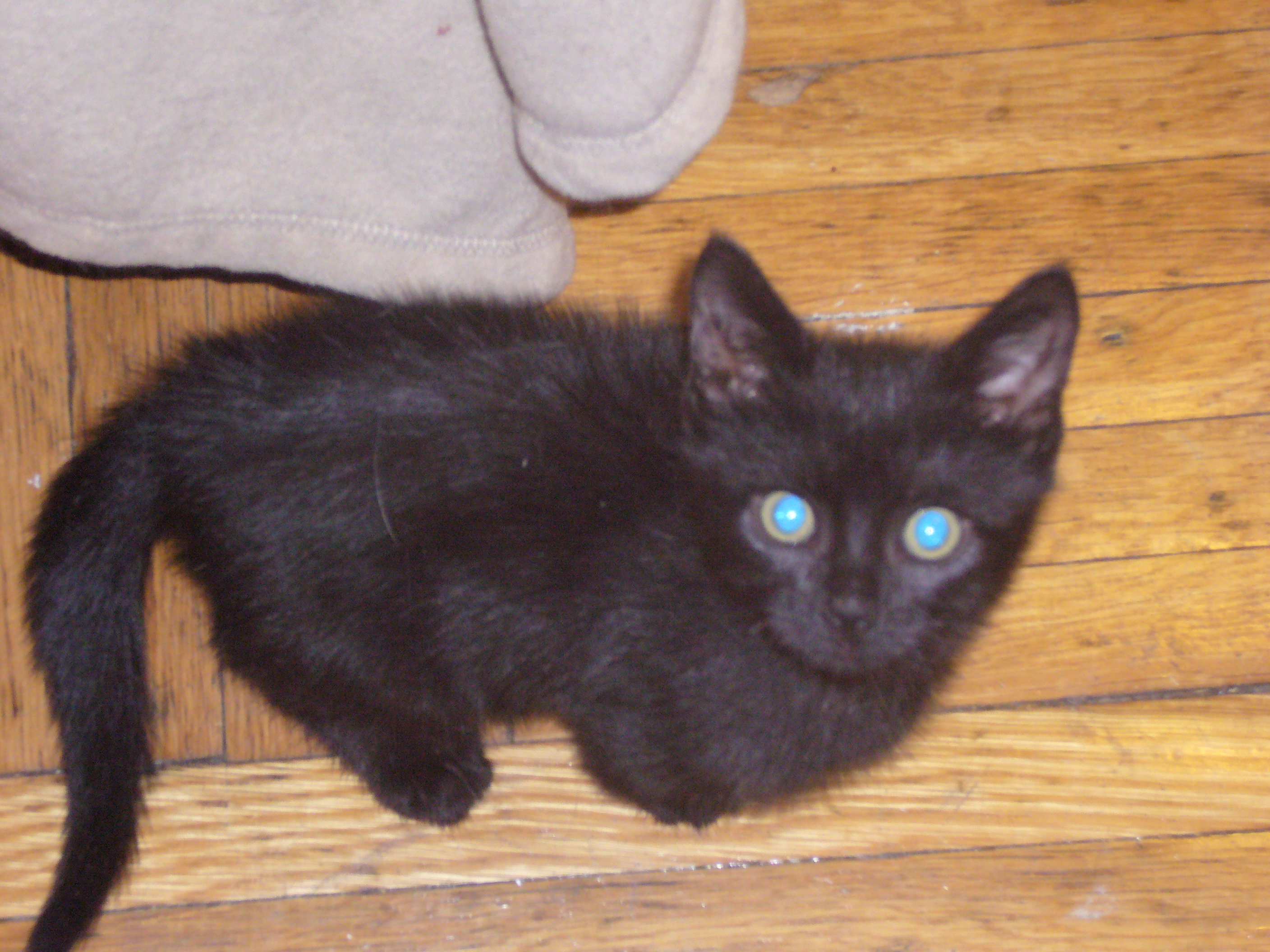
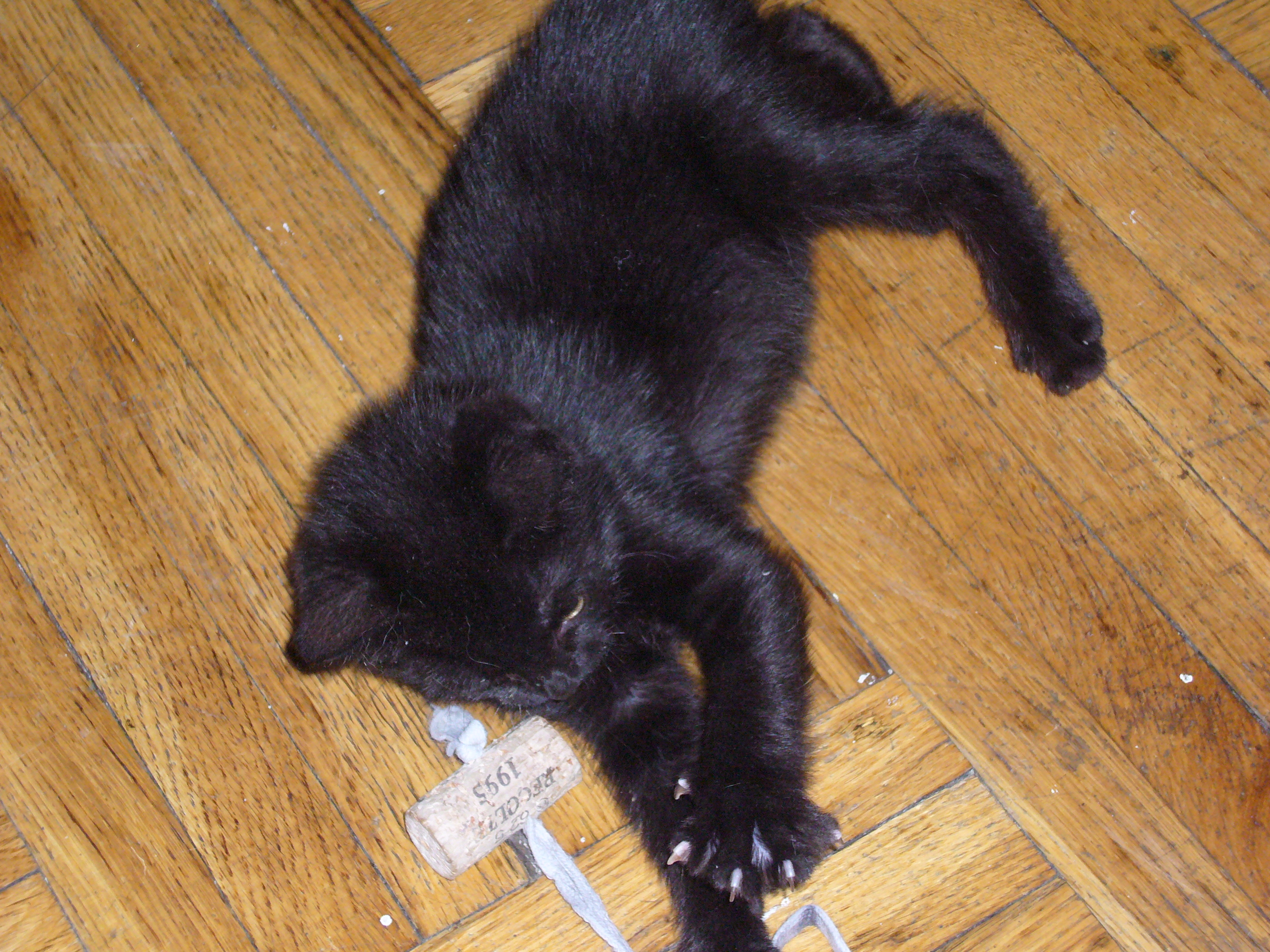
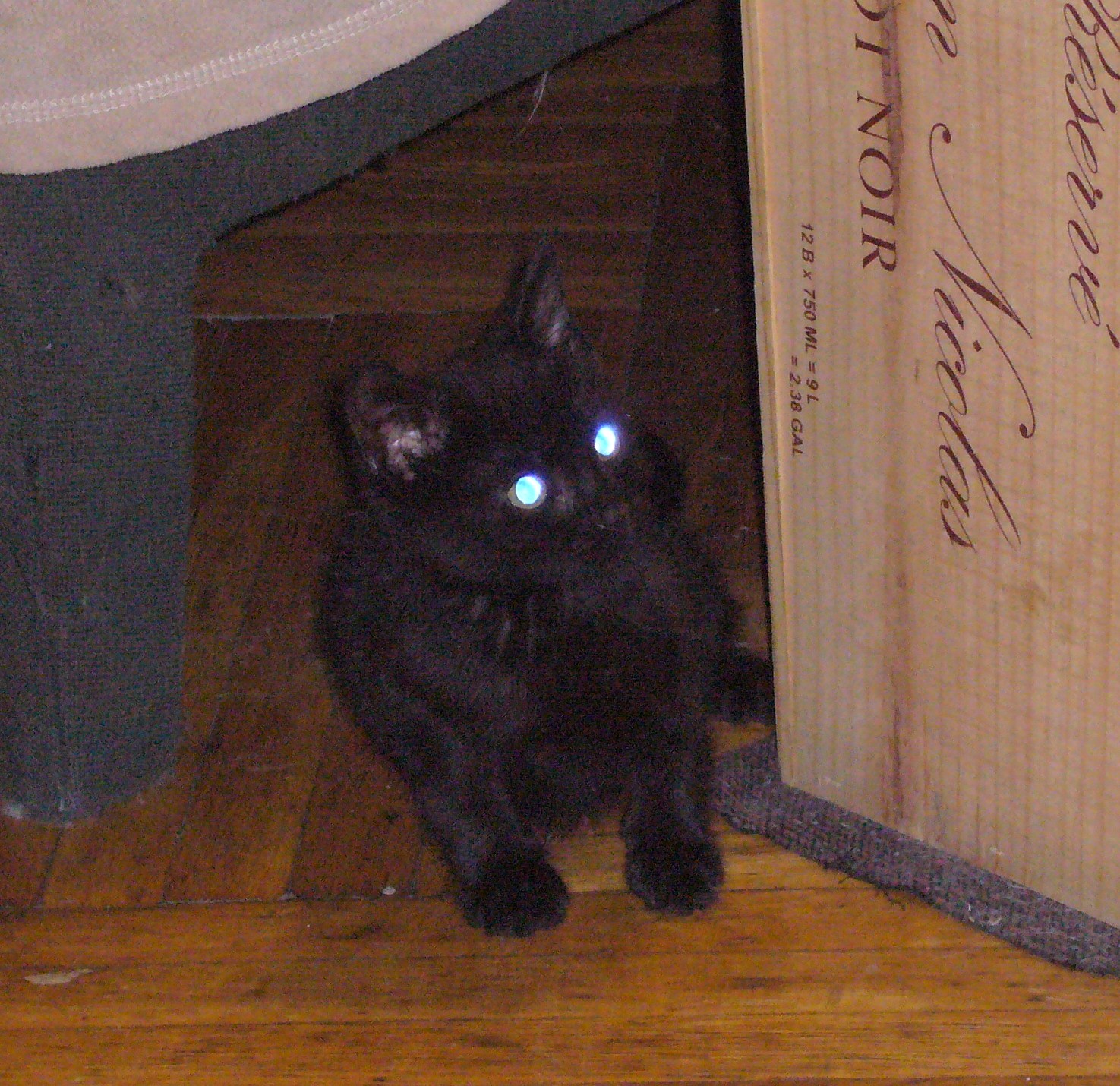
So how about some pictures of tiny Jasper?

Jasper July09a

Jasper Jul09h

Jasper Jul09d

He was a smelly, feral little boy, and lordy, did he do a number on my feet, ankles, and calves.

He’s pretty clean now, and only rarely goes gonzo. And, of course, he’s big.

009

But I still call him my kitty-boy.


Circus Maximus MMXVI: If you complain once more

15 04 2015

By the Fata Morgana, what is Peggy Noonan ingesting?

I don’t usually read Noonan—Charlie Pierce and Wonkette provide sufficient wrap-ups—but I caught an excerpt of her column in which she complains about the unfairness of the media:

Two points on the general feel of the 2016 campaign so far.

One is that in the case of Mrs. Clinton we are going to see the press act either like the press of a great nation—hungry, raucous, alive, demanding—or like a hopelessly sickened organism, a big flailing octopus with no strength in its arms, lying like a greasy blob at the bottom of the sea, dying of ideology poisoning.

Republicans know—they see it every day—that Republican candidates get grilled, sometimes impertinently, and pressed, sometimes brusquely. And it isn’t true that they’re only questioned in this way once they announce, Scott Walker has been treated like this also, and he has yet to announce. Republicans see this, and then they see that Mrs. Clinton isn’t grilled, is never forced to submit to anyone’s morning-show impertinence, is never the object of the snotty question or the sharp demand for information. She gets the glide. She waves at the crowds and the press and glides by. No one pushes. No one shouts the rude question or rolls out the carefully scripted set of studio inquiries meant to make the candidate squirm. She is treated like the queen of England, who also isn’t subjected to impertinent questions as she glides into and out of venues. But she is the queen. We are not supposed to have queens.

I honestly thought Pierce and the nasty good folks at Wonkette were exaggerating when they referred to her, uh, louche style, but now I’m wondering exactly how many lotuses she eats prior to laying down in front of her keyboard.

Marco Rubio had a pretty great announcement in that it made the political class look at him in a new way, and a better way. I have heard him talk about his father the bartender I suppose half a dozen times, yet hearing it again in his announcement moved me. I don’t know how that happened. John Boehner is the son of a barkeep.

I. . . it’s. . . Good goddess, who writes like this?

Okay, sorry, I got distracted by the vapors wafting off of her. . . thoughts. The real point in bringing this up is to bang away on one of my favorite pots: Fairness doesn’t matter in electoral politics.

It doesn’t matter if Noonan is correct in her assessment of the mild treatment of Clinton (she is not) and that GOPpers will be subject to the cruelest and most unusual punishment by the media (if only), because fairness itself doesn’t matter.

I get the complaints, I do—I hated Ronald Reagan and thought he skated from the ill consequences of his policies, and considered the press’s treatment of Al Gore juvenile (and I still don’t understand how Joe Biden gets away with what he does)—but in the long march to the presidency, the agita over media slights or mis-magnifications is itself misplaced.

Sure, it allows you (if you are Peggy Noonan) to fill column space with psychedaelia, but the candidates themselves can’t get bogged down in the media mire: whining about the news-meanies isn’t going to get the non-tribal voter to the polls.

And that’s the whole point of the campaign: to get the folks on your side to show up, and to prod those who aren’t on the other side (and maybe a few who are) to drag their asses to the polls and pull the level or draw the line or punch the screen for you.

Who knows, maybe in Noonan’s marmalade-sky world, slurring about fairness makes its own tangerine sense. But on that hard, hard campaign trail, it doesn’t matter.

Winning matters. That’s all that matters.

~~~

h/t Shakesville


If I’m so wrong

12 04 2015

Too many thoughts, not enough words.

No, that’s not right: too many thoughts in too many directions, words scattering after the thoughts.

I didn’t make the argument that pluralism is best protected by the one-law principle (I guess I’d call it), and have been stewing about how to brew up that argument.

David Watkins (aka “djw”) at Lawyers, Guns & Money had a couple of good posts, as did John Holbo at Crooked Timber—the comments are even more provocative than the original post—the latter of which spurred a multi-page effusion of thoughts that. . . led to no greater coherence of those thoughts.

So: more work to do.

One thing did seem worth mentioning now, however, and that is that I was wrong to assert that adherence to a one-law standard would be sufficient to protect and even promote pluralism: it would not.

I think it can protect pluralism, but not on its own. One addition might be a robust defense of one’s off-the-clock expressions against on-the-job discipline or punishments. That is, as long as someone performs her duties at work, what she says or does when not at work can’t be used against her by her employers.

There are issues with this, of course, in terms of salaried employees, or those for whom off-the-clock expressions might be fairly seen as relevant to the job (e.g., a fire fighter who hates Catholics or a teacher who argues that children of single parents are damaged), or for a boss or CEO who is to represent an entire company.

And that more is involved than just employers/employees implies that other principles/standards may be required.

As I said, more work ahead.


Stop making sense

8 04 2015

wis-smAnd so they lost.

I didn’t go to a bar, didn’t follow the game online (tho’ I did check early in the second half to see the Badgers up), didn’t even stay up to see how it all turned out.

It is unlikely they will get back even to the Final Four anytime soon.

So, three reactions:

1. The critic-of-the-NCAA side of me is mildly satisfied with the loss, insofar as it makes it easier for me not to pay attention to college sports.

It’s a shitty reaction, I know, and only reinforces the fact that my so-called principled stand against exploitation is weak and requires reinforcement.

(See also: TBI and football and hockey.)

2. The fan side is sad.

I noted in the last post that a week away from the game and the game won’t matter; here it is two days out and it doesn’t matter.

Still, a win would have nice, and I would have enjoyed it, however fleetingly.

3. I really don’t like being a fan.

Some of the teams I have rooted for—Badgers (various), Brewers, Packers, Habs—have done well, some have not, and I had a lot of fun rooting for them when they won. Losing could be a bummer, but only of the most minor sort.

And then at some point the teeter tottered and the fun fleeted and the bummedness hunkered down, and I ended up ginning up serious mopes over losses.

That just seemed silly to me, so I stepped back.

This isn’t a critique of sports or any other kind of fandom (in fact, I kinda wish I had some of my old music-and-theater mojo back), and I’m making no point beyond the very small one that, for the most part*, for me, following sports stopped making sense.

*Except for women’s tennis. Yeah, as long as Serena is playing I’ll be paying at least a little bit of attention.


On Wisconsin

5 04 2015

Such a hypocrite, I am.

I don’t like the NCAA, don’t like the outsized role Division I sports plays at colleges and universities, think athletes should get paid and insured, believe that NCAA exploits the athletes in football and men’s basketball, and generally think that if the NFL and the NBA want minor league teams they oughtta pay for those teams themselves.

I would support the University of Wisconsin dropping out of the NCAA and fielding only club teams.

I have more-or-less stopped following football and hockey—a decision reinforced by concerns over traumatic brain injury—and am generally not a fan of basketball.

But can I tell you that I’ve checked the sports pages throughout the men’s tournament, and spent the morning reading report after report on the team’s win over Kentucky and its advancement to the championship game (even as I know that a week from now whether they win or lose won’t matter)?

But that tomorrow night I am sorely tempted to go sit my hypocritical ass on a barstool somewhere, watch the game, and scream

badgerL

Yep yep yep. . . .
~~~
Image: HarperCollins